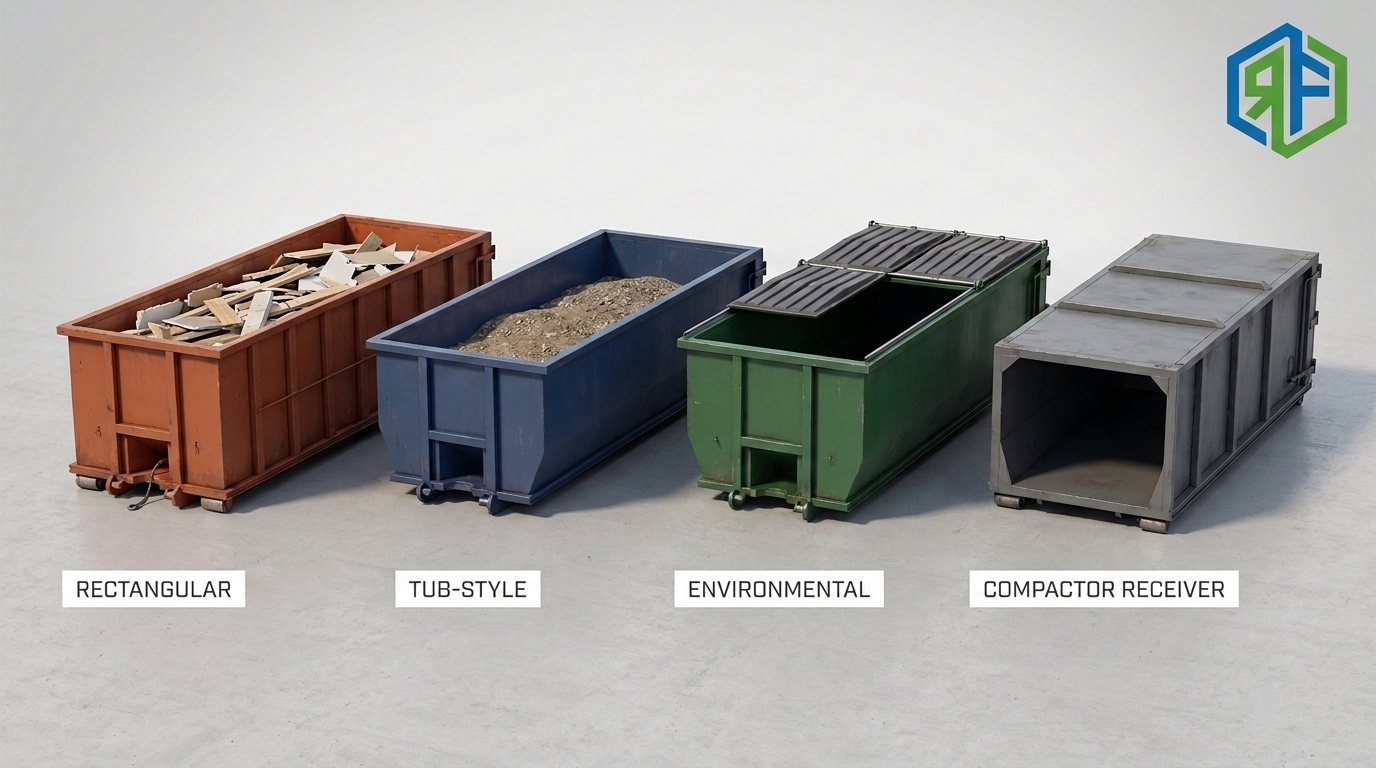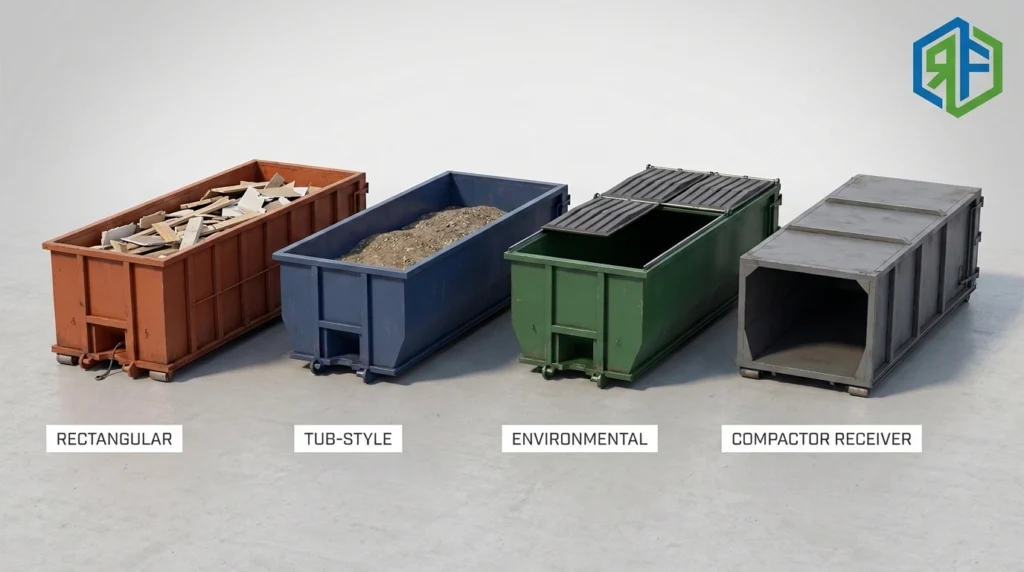
Roll-off containers come in several distinct types, and each one is engineered for a specific job. Rectangular containers handle general construction and demolition debris. Tub-style containers work better for heavy, dense materials like dirt and concrete. Compactor receivers connect to stationary compactors for high-volume commercial waste. Environmental containers are fully sealed for hazardous liquids and sludge. Dewatering containers separate solids from liquids. Recyclers sort materials at the point of collection. Rolling roof containers protect weather-sensitive loads with retractable lids. Flatbed roll-offs haul oversized equipment and machinery. What separates these types goes deeper than shape. The steel, the welds, the reinforcement, and the internal components all change based on what the container needs to handle.
Rectangular Roll-Off Containers
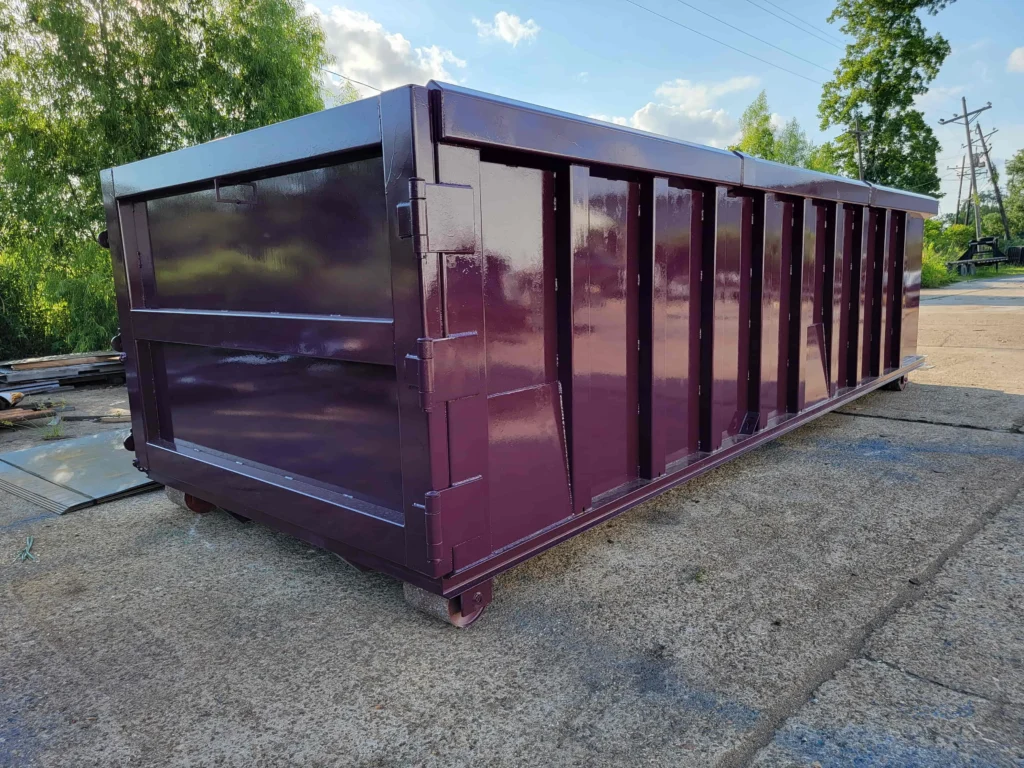
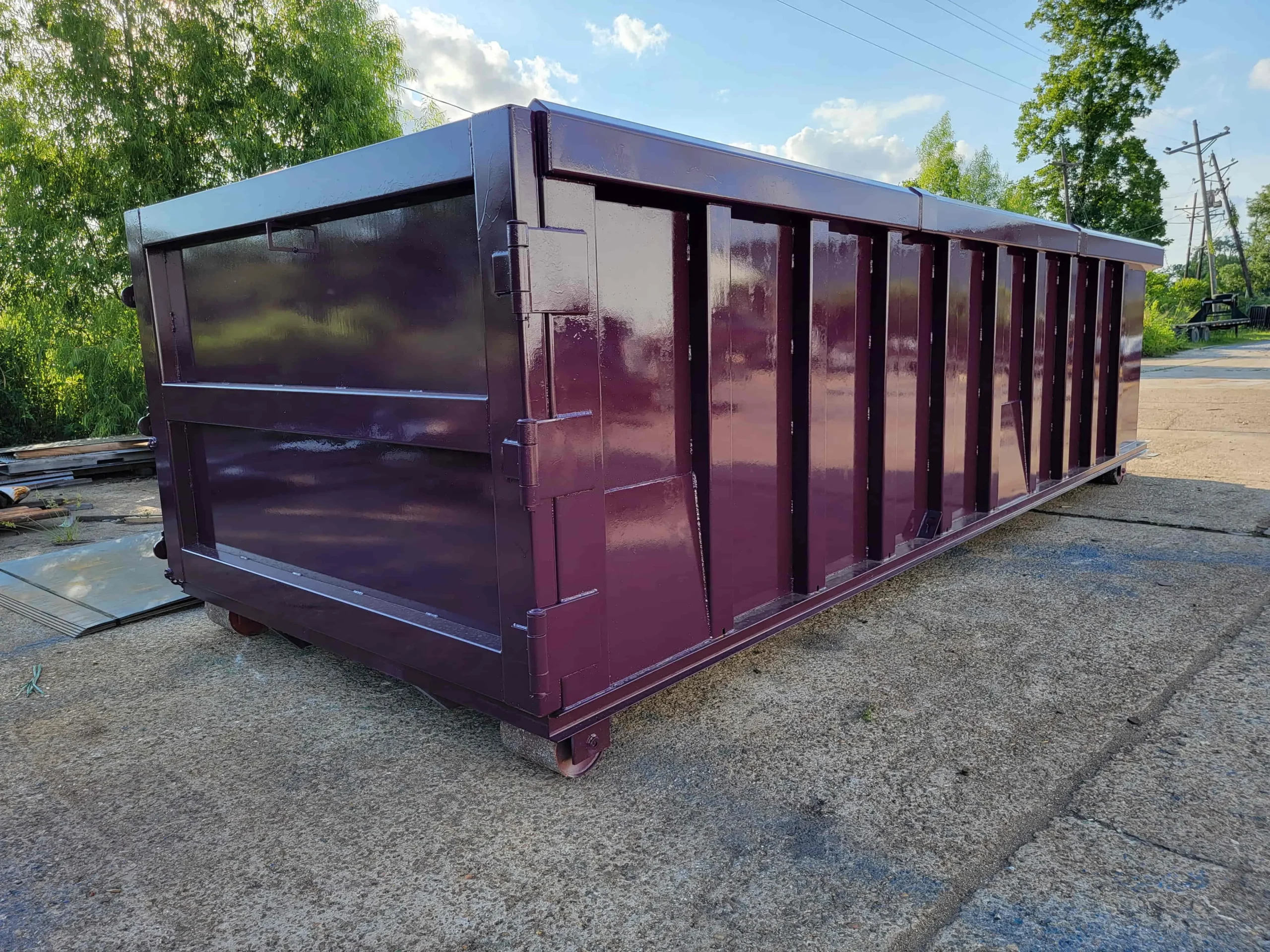
Rectangular containers are the most common roll-off type on the road. Open top, straight sides, a rear swing door, and a cable or hook lift connection up front. Most haulers run these on construction sites, renovation projects, roofing jobs, and commercial cleanouts.
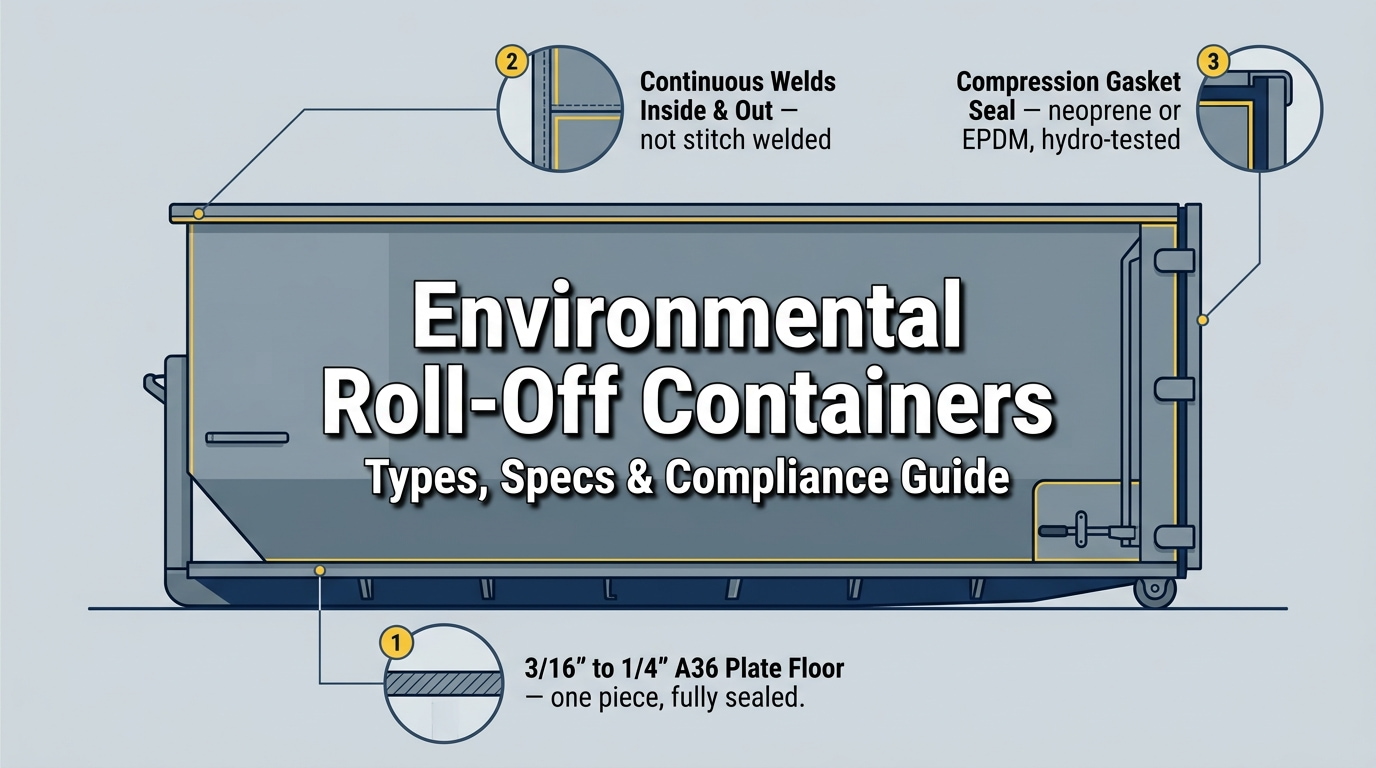
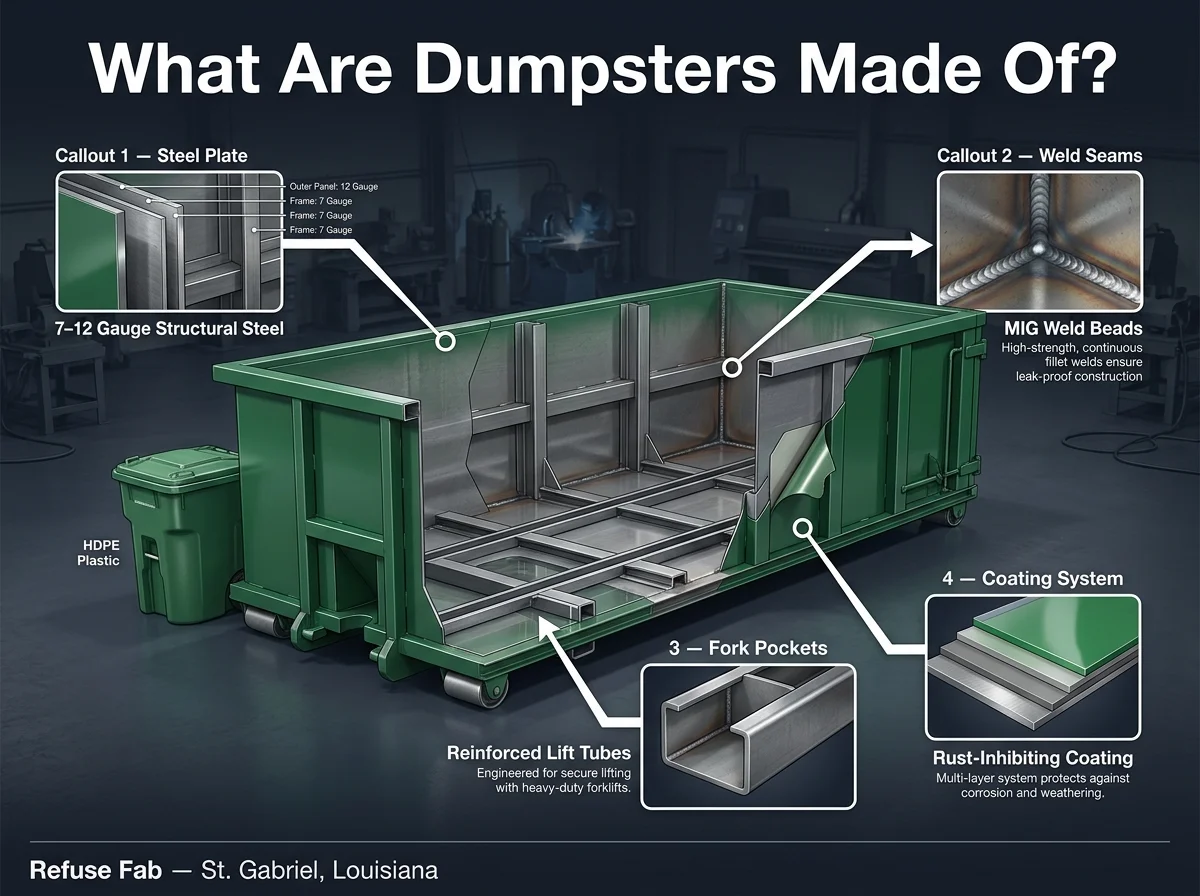
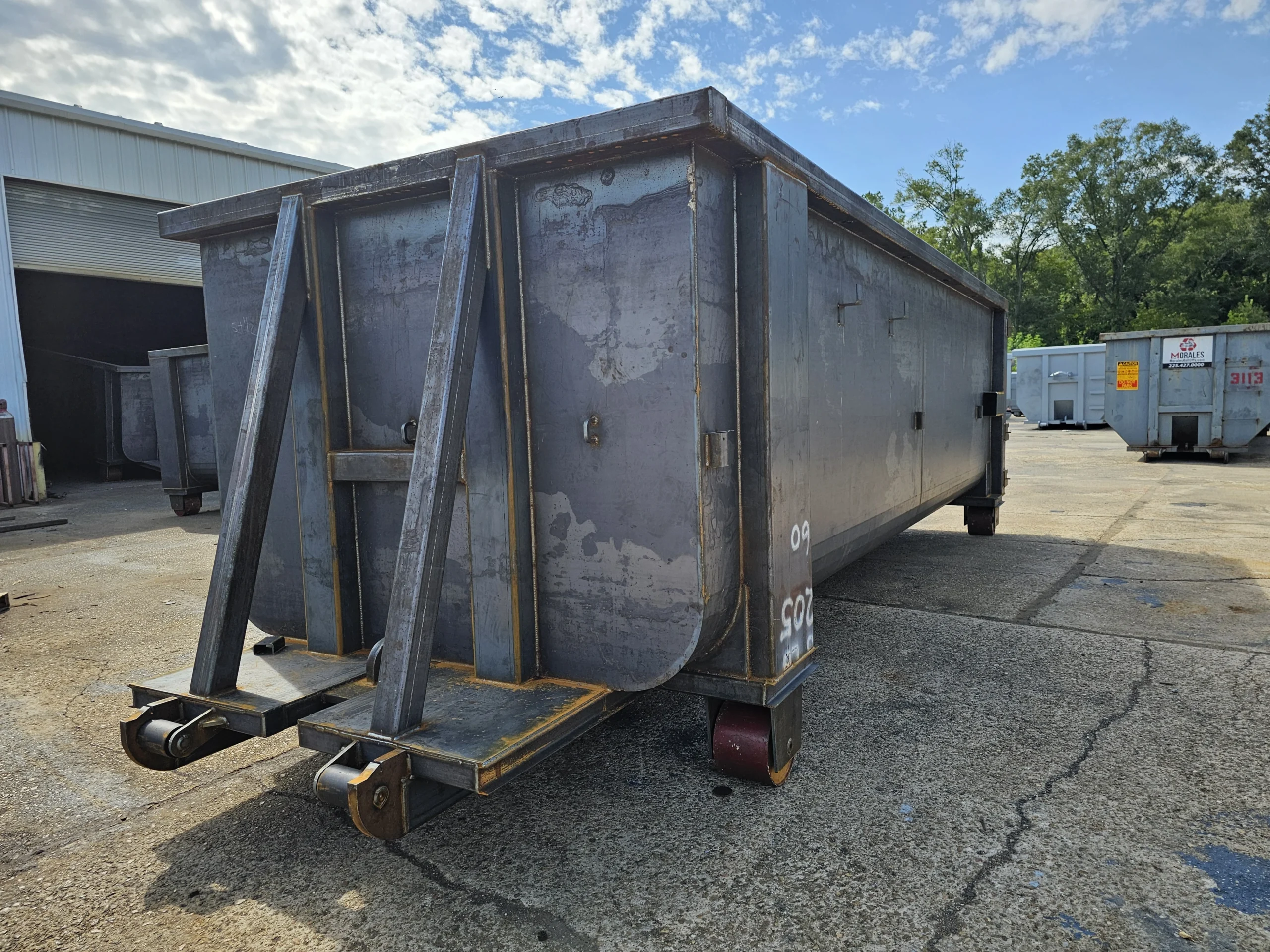
Construction starts with a one-piece 3/16 inch floor plate. One-piece means no seams running across the bottom where debris grinds through over time. Underneath, 6 inch by 2 inch by 3/16 inch long sills run the length of the container and carry the load across the truck frame during transport. Cross members tie the sills together, and on a standard build those are 3 inch by 4.1 channel sections. Spacing matters here. Containers built with cross members on tighter centers hold up longer under heavy loads because the floor has more support points between the sills.
Up top, structural channel rub rails run along both sides. These protect the upper edge of the container when excavators and loaders dump material over the sides. A solid steel bullnose at the front takes the impact when the container slides onto the truck. Front rollers measure 4 inches by 6 inches, and rear ground rollers are 10 inches by 8 inches with greaseable fittings so they keep turning instead of dragging.
Every exterior seam is continuously welded. Not stitch welded. Continuous welding costs more in labor and wire, but a stitch weld in a stress zone will crack within the first year of hard service. That crack turns into a split, and the container is down for repair.
Rectangular roll-off containers are available from 10 to 40 cubic yards, with custom sizes built on request.
Standard vs Heavy Duty vs Ultra-Heavy Duty
Not all rectangular containers are built the same, even at the same yard size. Duty classification changes the steel.
Standard duty containers use 3/16 inch floors and are built for general waste, household debris, and light commercial loads. Heavy duty builds step up to 1/4 inch floor plate and 1/4 inch rub rails for demolition debris, concrete, and heavier material. Cross member spacing tightens, and some manufacturers add extra gussets at the sill connections. Ultra-heavy duty containers use the thickest steel available and reinforced doors for the hardest service: scrap metal, industrial waste, and materials that exceed 1,000 pounds per cubic yard.
Duty classification matters when ordering. A standard duty container loaded with concrete will flex and buckle at the floor. Meanwhile, a heavy duty container hauling household cleanout waste costs more than it needs to. Matching the build to the waste stream is how haulers get 10 to 15 years out of a container instead of three.
Tub-Style (Bathtub) Roll-Off Containers
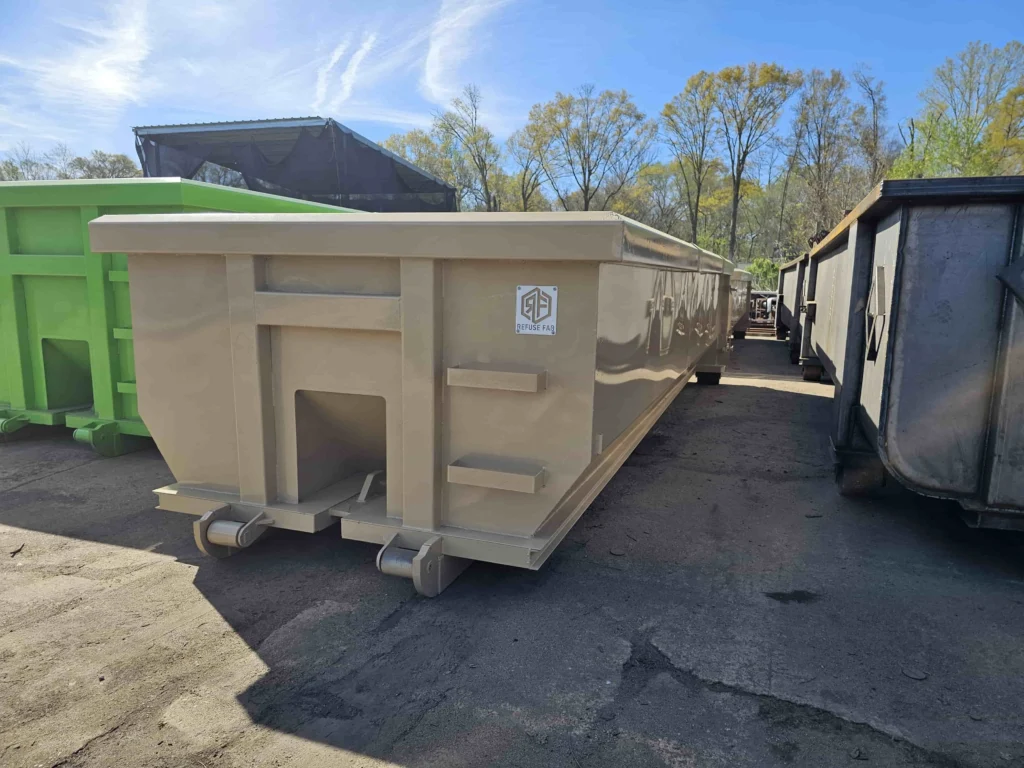
Tub-style containers have smooth, sloped sides that angle outward from the floor to the top rail. No vertical posts, no exterior bracing on the walls. This shape does two things that matter for specific operations.
First, material slides out cleanly. When the truck tilts a tub-style container to dump, loose material like dirt, sand, gravel, and demolition rubble slides down the sloped walls instead of catching on vertical braces or interior corners. For excavation and land-clearing jobs, where the container gets loaded and dumped multiple times a day, faster dumping means more loads per shift.
Second, tub-style containers stack. Without exterior posts and bracing, empty tubs nest inside each other. Haulers who run large fleets save significant yard space by stacking empties rather than parking them side by side. For operations moving containers between job sites and a central yard, this cuts storage footprint in half or more.
Underneath, the construction mirrors a rectangular container. One-piece 3/16 inch floor, 6 inch by 2 inch by 3/16 inch long sills, and 3 inch by 4.1 channel cross members on 18 inch centers. Every cross member is gusseted to the sills for additional strength. Rear ground rollers are the same 10 inch by 8 inch greaseable units. Solid steel bullnose up front.
Where tub-style and rectangular containers really differ is the wall itself. Tub-style walls carry load through their angled geometry rather than through external reinforcement. The sloped shape acts as a natural brace, distributing pressure from the load outward and downward. This is why tub-style containers handle dense, heavy materials well despite having smoother walls.
Wondering which type fits your operation better? Our breakdown of rectangular vs tub-style roll-off containers covers the key differences in detail.
Compactor Receiver Containers
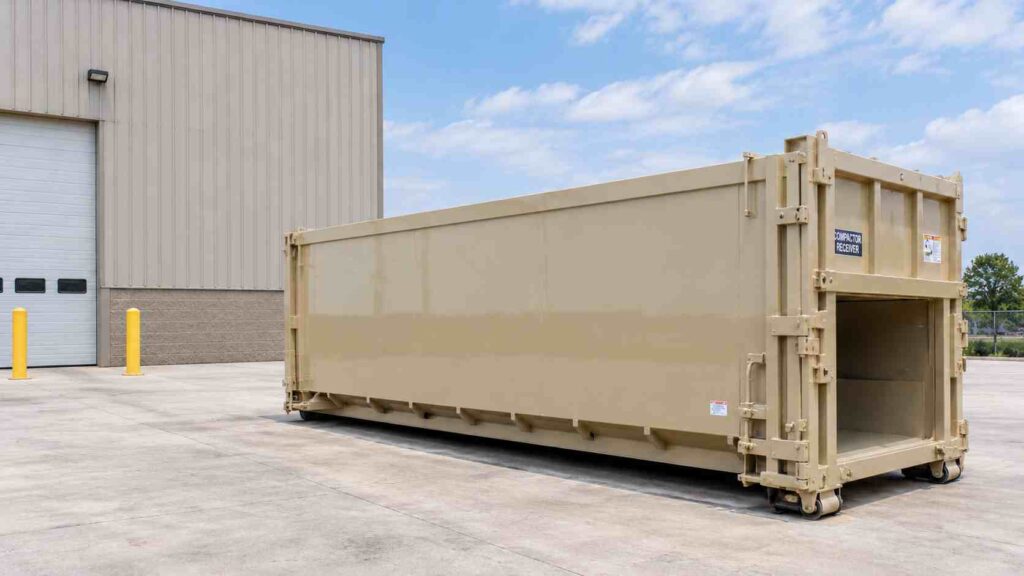
Compactor receivers are different from every other roll-off type because they do not get loaded from the top. These containers connect to a stationary compactor unit at a commercial facility. The compactor rams waste into the container through an opening in the front, packing it tight before the container is hauled away.
This changes the engineering completely. Where a standard roll-off container takes vertical loading (material dropped in from above), a compactor receiver takes horizontal force from a hydraulic ram pushing compacted waste through the mouth of the container. Walls need to resist outward pressure from densely packed material rather than just holding loose debris. Reinforcement runs heavier through the sides and top, and the connection point between the container and the compactor needs to seal tight so compressed waste does not push back out.
Grocery stores, distribution centers, big box retailers, and manufacturing plants generate enough waste volume to justify compactors. One compactor receiver holds two to three times the material weight of an open-top container the same size because the waste is compressed before it enters the box. That means fewer hauls per week, which is where the cost savings come from for high-volume accounts.
Environmental and Sealed Containers
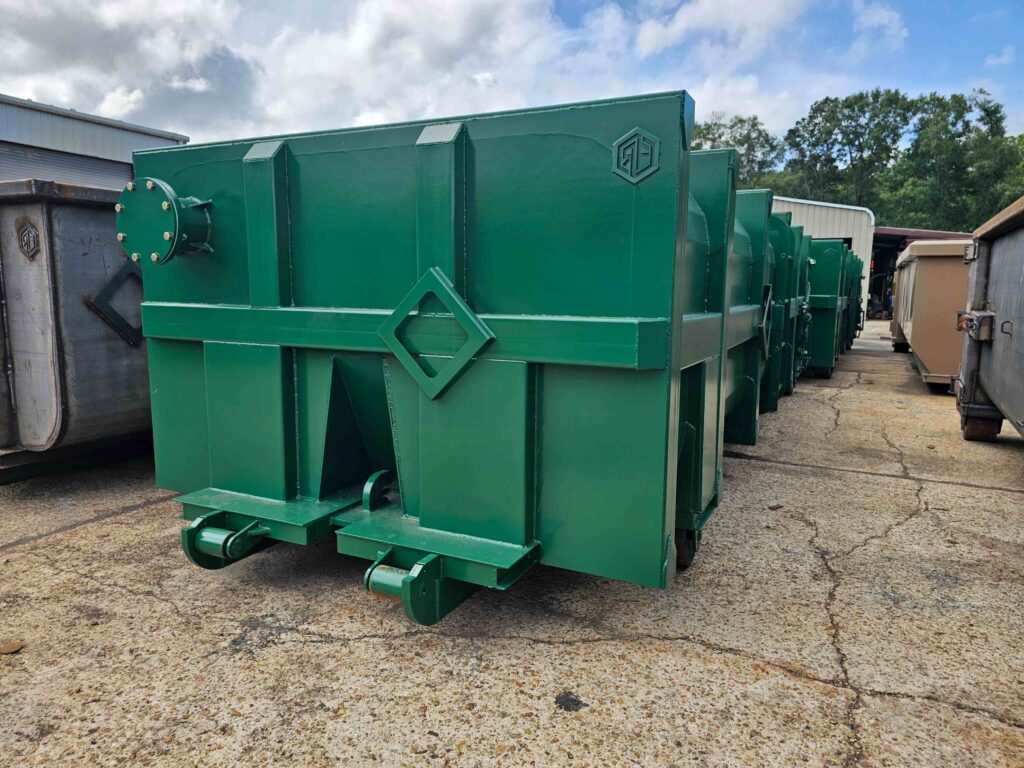
Environmental containers are built for liquids, sludge, contaminated materials, and anything regulated under hazardous waste handling requirements. Every seam is welded 100 percent, and each container is hydro-tested before it leaves the shop to confirm there are no leaks. A single pinhole in a weld means the container fails the test and goes back for repair.
Three types of environmental containers handle different situations:
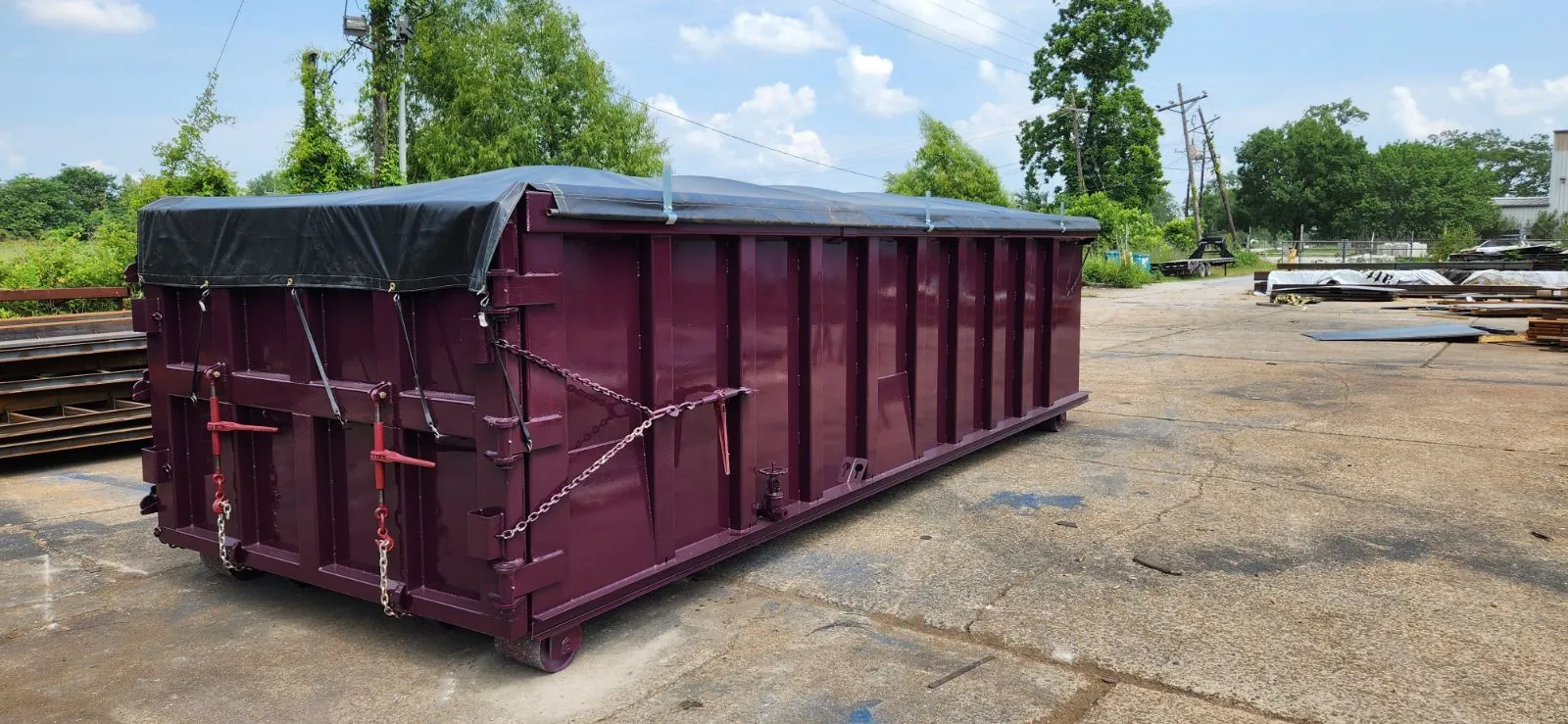
Roll tarp containers look similar to tub-style units but include a tarp system that rolls across the top to cover the load. These work for materials that need to stay covered during transport but are not liquid hazards. Dust control, weather protection, and DOT compliance for covered loads are the primary reasons haulers choose roll tarps.
Metal lid containers replace the tarp with two permanent steel lids that roll open and closed on a track system. Metal lids seal tighter than tarps and hold up to more abuse. For operations that open and close the container multiple times a day, metal lids are faster and more reliable than re-securing a tarp every cycle.
Vacuum containers are fully sealed units designed to work with a vacuum truck. Instead of loading material from the top, a vacuum truck suctions liquid, sludge, or slurry directly into the container through a port. These show up at chemical plants, refineries, industrial wastewater operations, and tank cleaning jobs.
All environmental containers at Refuse Fab are built on cable lift configurations. The reasoning is practical: hook lift systems apply force at a single connection point, and the torque at that point can stress sealed welds. Cable systems distribute the lifting force more evenly, which protects the sealed seams that keep the container from leaking.
Dewatering Containers
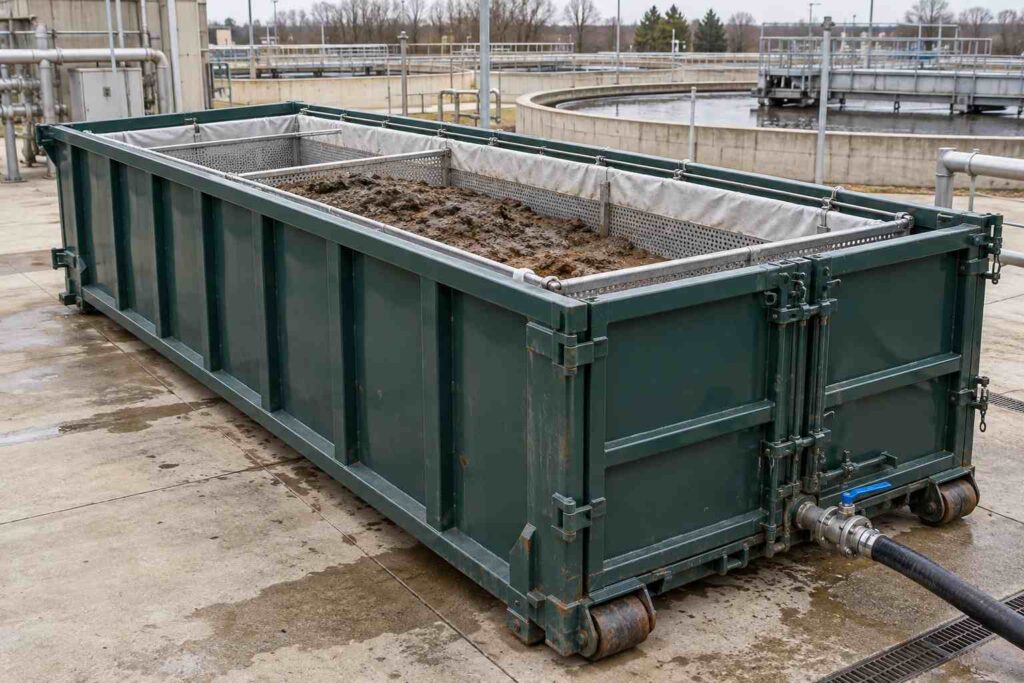
Dewatering containers are a specialized type of environmental container designed to separate solids from liquids. The container holds cages, liners, or filter screens (permanent or removable) that trap solid material while allowing water to drain through and out of the container through controlled discharge points.
Municipal wastewater plants, dredging operations, and industrial facilities that process wet sludge use dewatering containers to reduce the volume and weight of material before it gets hauled to a disposal site. Removing the water before transport cuts haul weight significantly, which means lower disposal fees and fewer trips.
Dewatering containers are fully welded and hydro-tested like other environmental units, but the filtration components add complexity. Cage or liner material, mesh size, and discharge system all vary based on the type of solids being separated and the discharge regulations at the site. Some operations need fine mesh to capture small particulates. Others need heavy gauge cages to handle abrasive materials like grit and sedite.
Refuse Fab builds dewatering and sludge containers with cages and filters that can be added to any environmental container design, either as a permanent installation or a removable insert.
Recycler Containers
Recycler containers (also called recycling roll-offs) are divided into separate compartments so different material streams can be collected in one container. Instead of needing three containers on a job site for cardboard, metal, and wood, a single recycler container with internal dividers handles all three.
Construction sites with recycling requirements and commercial facilities that sort waste at the source are the primary users. Some municipalities also use recycler containers at public drop-off points where residents bring sorted recyclables.
Dividers inside a recycler container need to be strong enough to stay upright when the container is loaded from above with heavy material on one side and light material on the other. Uneven loading creates lateral pressure on the dividers, so the divider panels are welded to the floor and both sidewalls rather than just bolted in place.
Rolling Roof (Clamshell) Containers
Rolling roof containers, sometimes called clamshell containers, have a retractable roof system built into the top of the container. Steel or aluminum roof panels slide open on tracks to allow loading from above, then roll closed to fully cover the contents during transport.
That roof mechanism adds weight and moving parts that other roll-off types do not have, so the track system, rollers, and panel hinges need regular maintenance to keep operating smoothly. Panels that bind or jump the track create safety problems on the job site and delay loading.
Paper mills, cardboard recycling operations, food processing plants, and any facility that generates waste affected by rain or wind are the primary users. Wet cardboard doubles in weight. Soggy paper becomes unsortable at the recycling facility. A covered load also meets DOT requirements for securing loose materials during highway transport without needing a separate tarp or net.
Where rolling roof containers differ from metal lid environmental containers is purpose. Environmental containers are sealed to keep liquids and hazardous materials inside the box. Rolling roof containers are covered to keep weather and contamination out of otherwise dry material. The sealing standard is different because the regulatory requirement is different.
Flatbed Roll-Offs
Flatbed roll-offs are open platforms with no sidewalls. They work like a flatbed truck bed that can be loaded and unloaded using a roll-off truck’s hook or cable system. Heavy equipment, large machinery, pre-fab building components, and oversized items that would not fit inside a walled container go on flatbeds.
These containers are less common than walled types, but certain industries rely on them. Tree service companies use flatbeds to haul large logs and root balls. Industrial operations use them to move equipment between sites. Construction companies use them for structural steel and pre-cast concrete sections.
Because flatbeds carry concentrated point loads rather than evenly distributed loose material, the floor and sill construction runs heavier than a standard open-top container of the same footprint. Tie-down points welded to the floor and sides secure the load during transport.
How Construction Changes Across Types
Every roll-off container starts with the same foundation: floor plate, sills, cross members, rollers, and a bullnose. What changes by type is where the engineering effort concentrates.
| Feature | Rectangular | Tub-Style | Environmental | Compactor Receiver | Rolling Roof |
|---|---|---|---|---|---|
| Floor | 3/16″ one-piece (standard) | 3/16″ one-piece | 3/16″ or heavier, fully welded | Heavier gauge, reinforced for ram pressure | 3/16″ one-piece |
| Walls | Vertical with external bracing | Sloped, smooth sides | Fully sealed, 100% welded | Reinforced for horizontal compaction force | Vertical with roof track rails |
| Cross members | 3″ channel | 3″ channel on 18″ centers, gusseted | Same as base type | Tighter spacing for load distribution | Same as base type |
| Sills | 6″x2″x3/16″ | 6″x2″x3/16″ | 6″x2″x3/16″ | Heavier for compacted weight | 6″x2″x3/16″ |
| Welding | Continuous exterior | Continuous exterior | 100% sealed, hydro-tested | Continuous, reinforced at ram connection | Continuous exterior |
| Special feature | Rear swing door | Stackable, clean dump | Sealed for liquids/hazmat | Front opening for compactor connection | Retractable roof panels on tracks |
Choosing a container type based on price alone misses the point. A cheaper container loaded with the wrong material fails fast. Matching the type and the duty classification to the actual waste stream and the way the container gets used on the job is what separates a 15-year container from a 3-year container.
Hook Lift vs Cable Hoist Compatibility
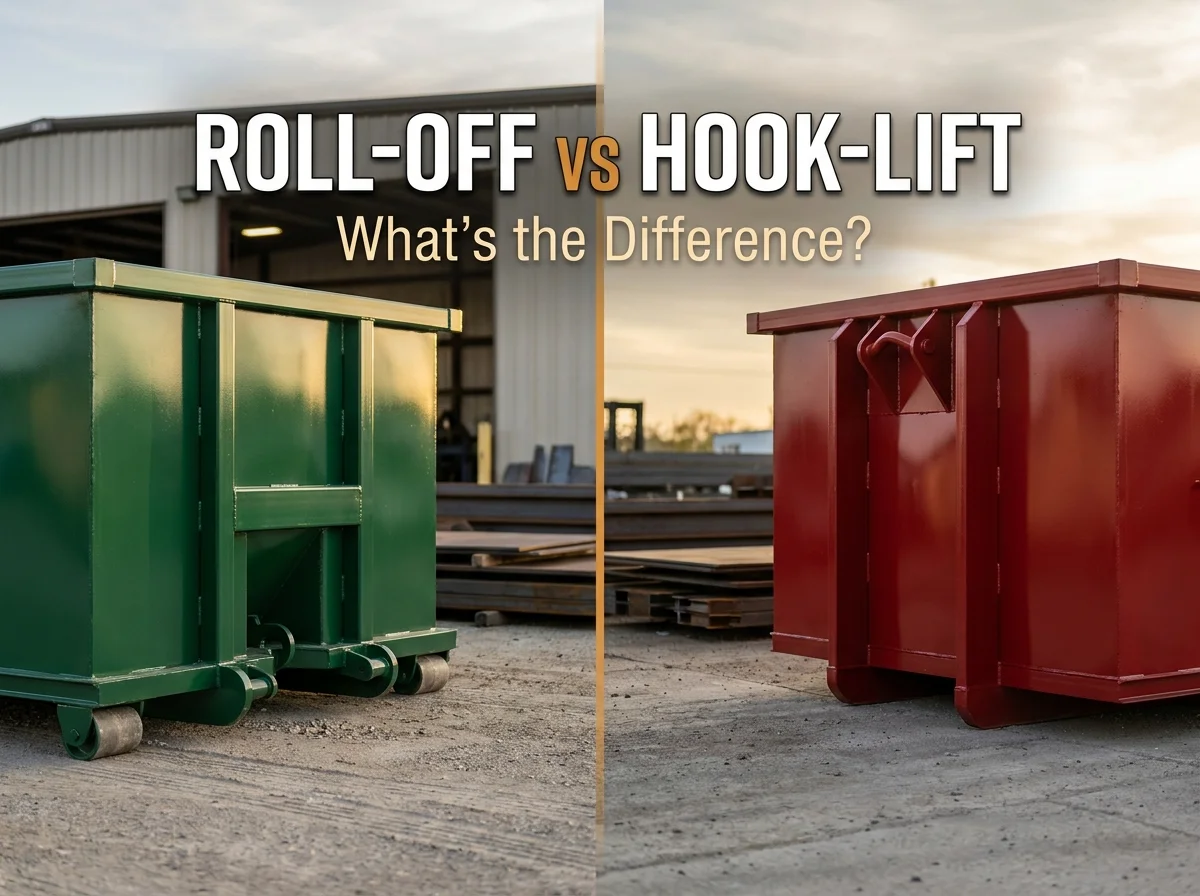
One detail that trips up buyers: not every roll-off container works with every truck. Containers are built for either a hook lift or a cable hoist system, and some can be configured for both (dual lift).
Cable hoist trucks use a winch and cable to pull the container up onto the truck bed from the ground. Hook lift trucks use a hydraulic arm that grabs a hook welded to the front of the container and lifts it up and over onto the truck frame. The connection point, the frame geometry, and the roller placement are all different between the two configurations.
When ordering containers for an existing fleet, match the lift type to your trucks first. Refuse Fab builds containers in hook lift, cable hoist, and dual lift configurations.
Frequently Asked Questions
What is the most common type of roll-off container? Rectangular open-top containers make up the majority of roll-off containers in service. They are the standard choice for construction debris, demolition waste, commercial cleanouts, and residential projects. Most haulers run a fleet that is 70 to 80 percent rectangular containers with tub-style, environmental, and compactor receivers filling specialized roles.
What sizes do roll-off containers come in? Standard sizes range from 10 to 40 cubic yards. Ten-yard containers work for small residential cleanouts and bathroom renovations. Twenty-yard containers handle mid-size projects like roofing jobs and garage cleanouts. Thirty and 40-yard containers serve large construction and demolition sites. For a detailed breakdown, our roll-off container sizes guide covers dimensions and capacities for each size.
What is the difference between rectangular and tub-style roll-off containers? Rectangular containers have straight vertical walls with external bracing. Tub-style containers have smooth, sloped walls that angle outward. The sloped shape dumps material more cleanly because nothing catches on internal corners or external bracing, and empty tubs stack inside each other for storage. Rectangular containers are better for bulky, irregularly shaped waste like construction debris and furniture.
How long does a roll-off container last? A well built container with properly matched duty classification lasts 10 to 15 years in regular service. Containers that get loaded beyond their weight rating, dragged across rough ground, or used for corrosive waste without proper protection wear out in three to five years. Heavier gauge steel and continuous welds add years over lighter builds.
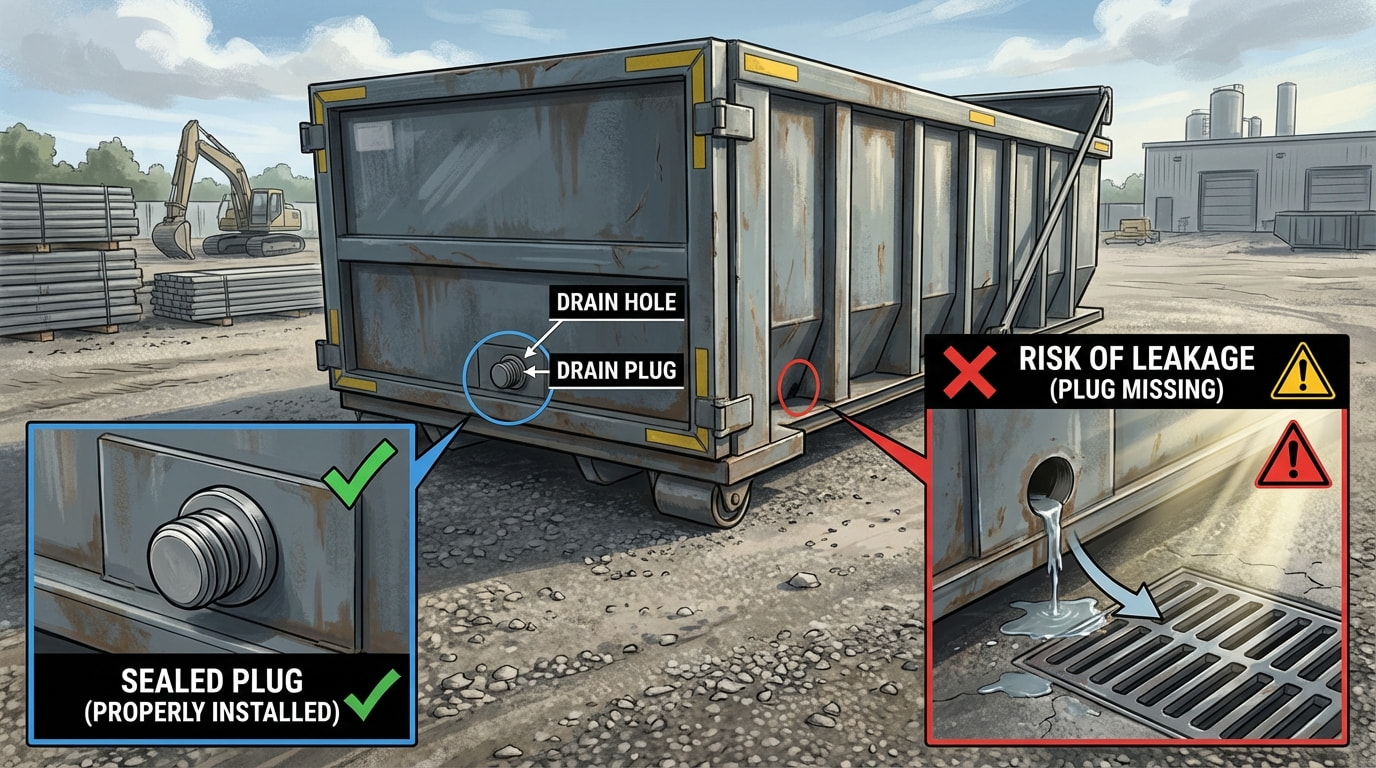
Can roll-off containers hold liquids? Standard rectangular and tub-style containers are not designed for liquids. They have drain holes and unsealed seams that will leak. Environmental containers with 100 percent welded seams and hydro-tested construction are built specifically for liquid and hazardous waste containment. Using a standard container for liquids violates environmental regulations and risks fines.
What does “continuously welded” mean on a roll-off container? Continuously welded means the weld runs the full length of every seam without stops or gaps. The alternative is stitch welding, where short weld segments are spaced apart with unwelded gaps between them. Stitch welding is faster and cheaper, but the gaps become stress points that crack under repeated loading. For containers in daily service, continuous welding is what keeps the box together long term.
Do I need a hook lift or cable hoist container? That depends on your truck. Hook lift and cable hoist systems are not interchangeable. A hook lift container will not load onto a cable hoist truck, and vice versa. Check your truck configuration before ordering containers. If you run a mixed fleet, dual lift containers work with both systems.
For custom container specifications or questions about which type fits your operation, contact the Refuse Fab team or browse our full product catalog.