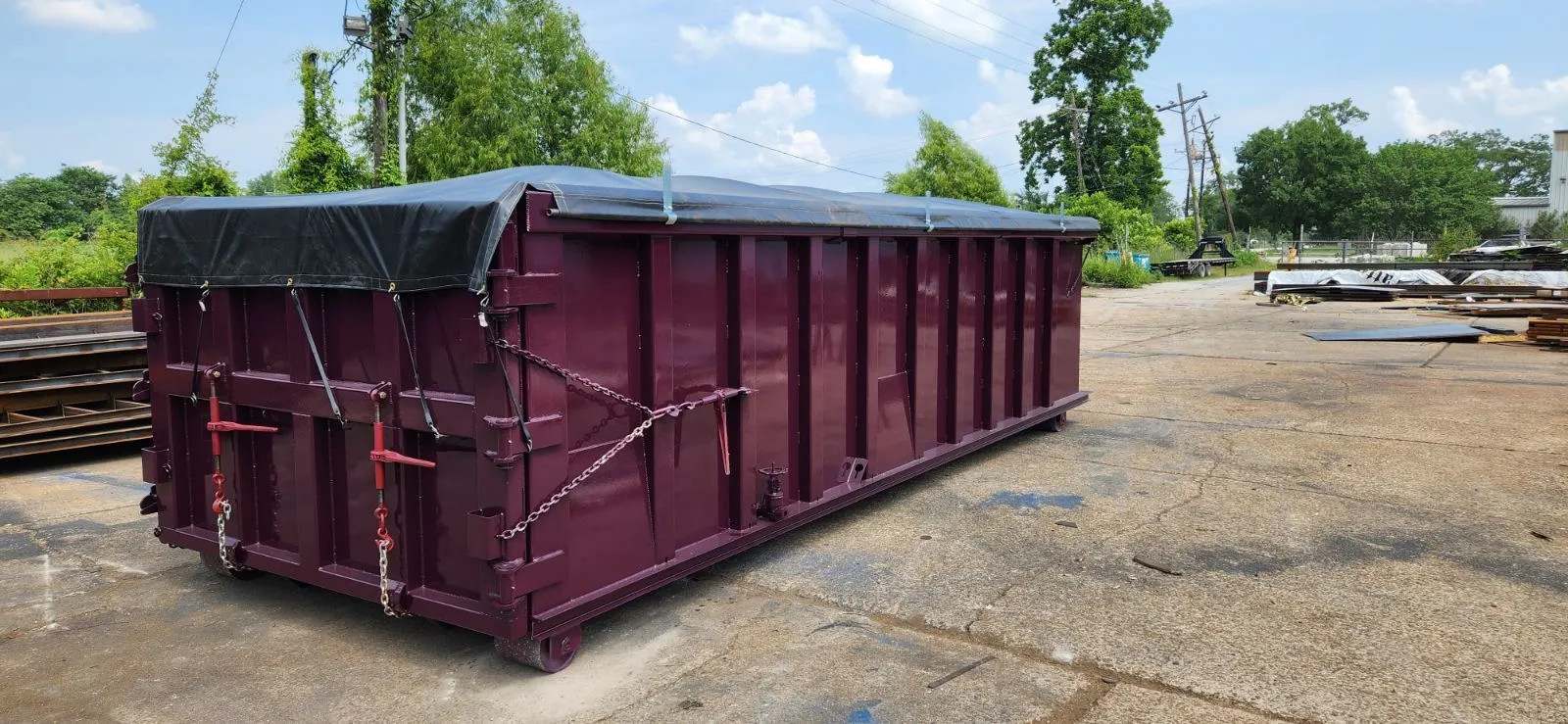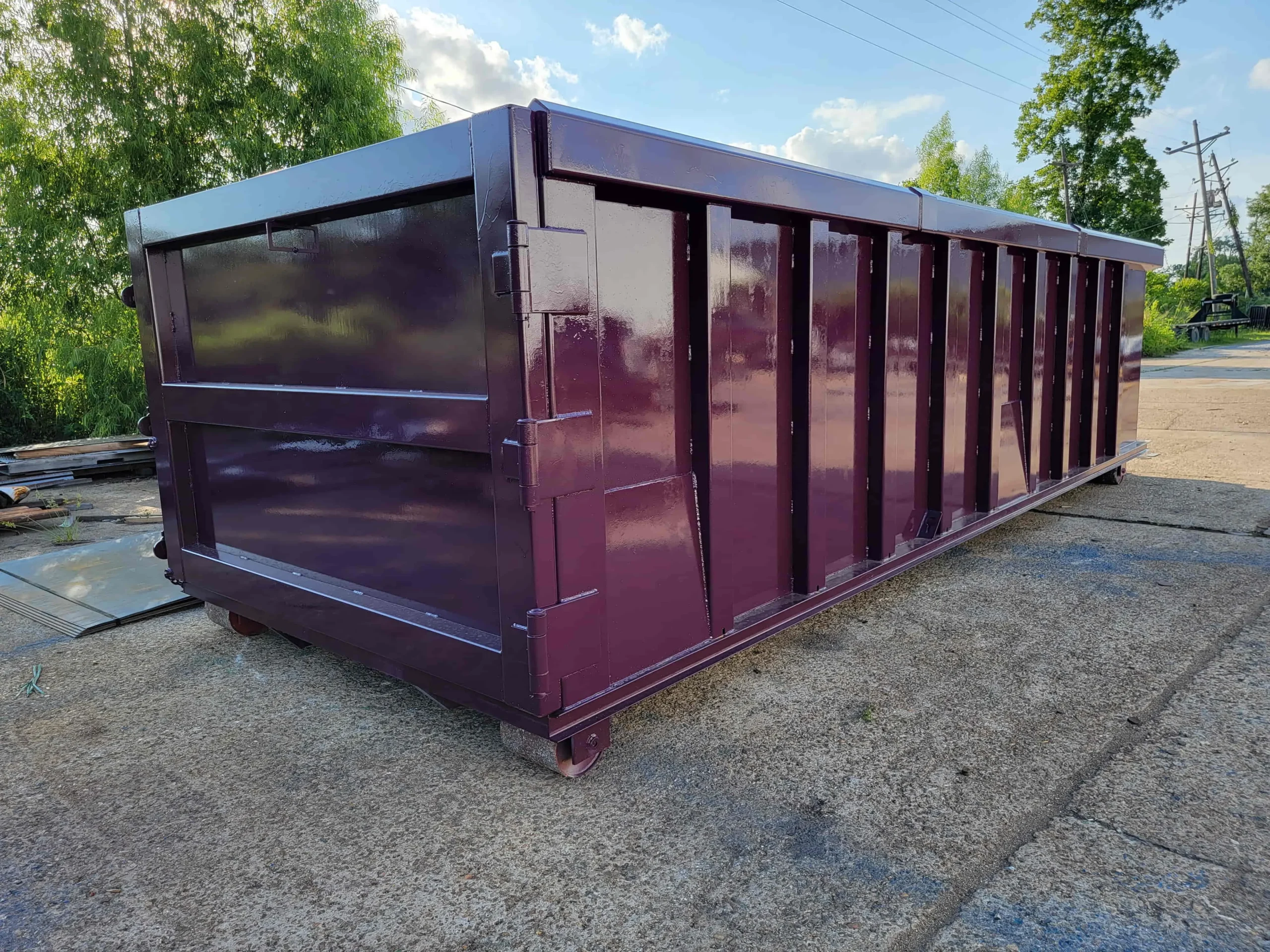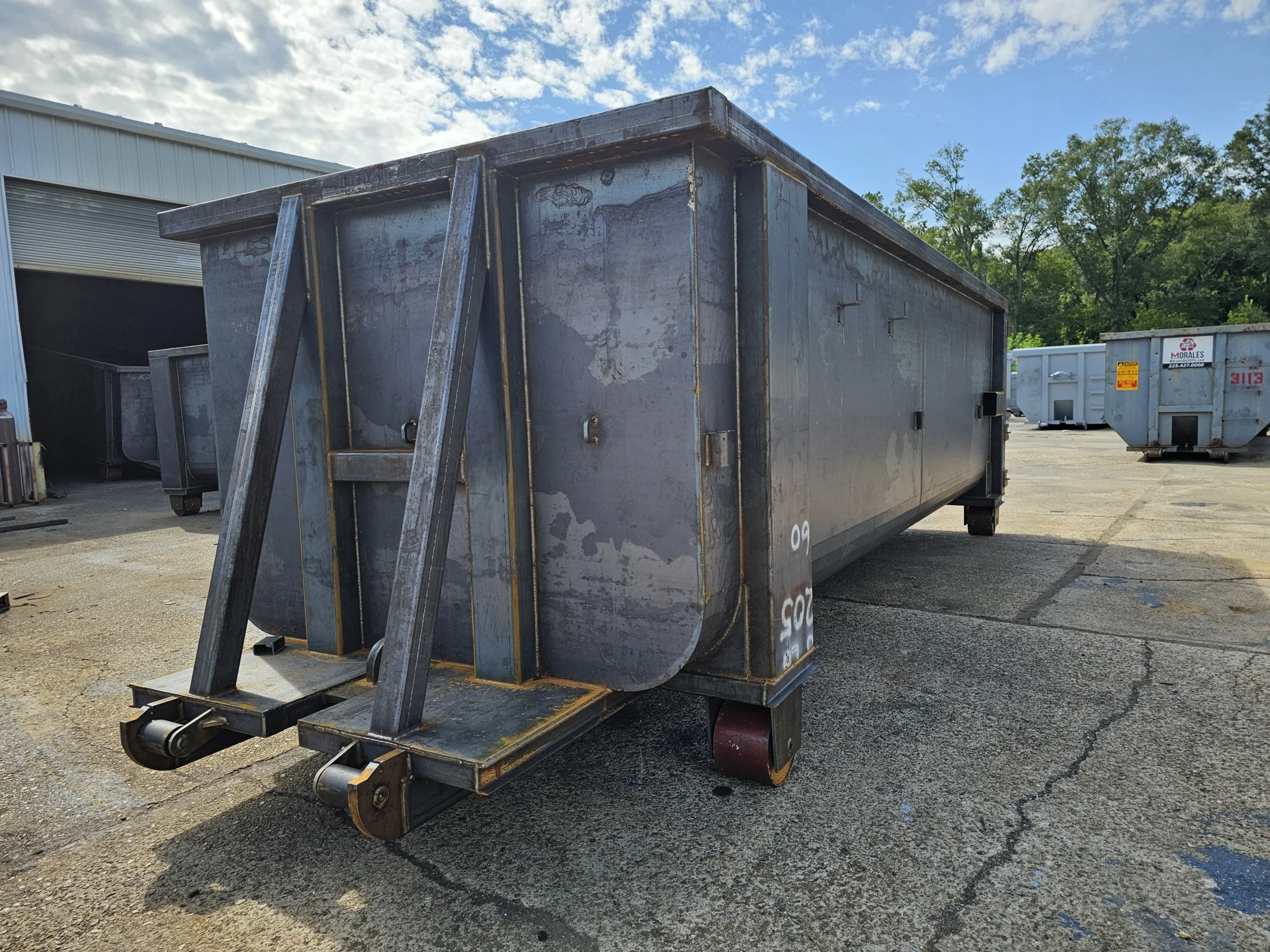
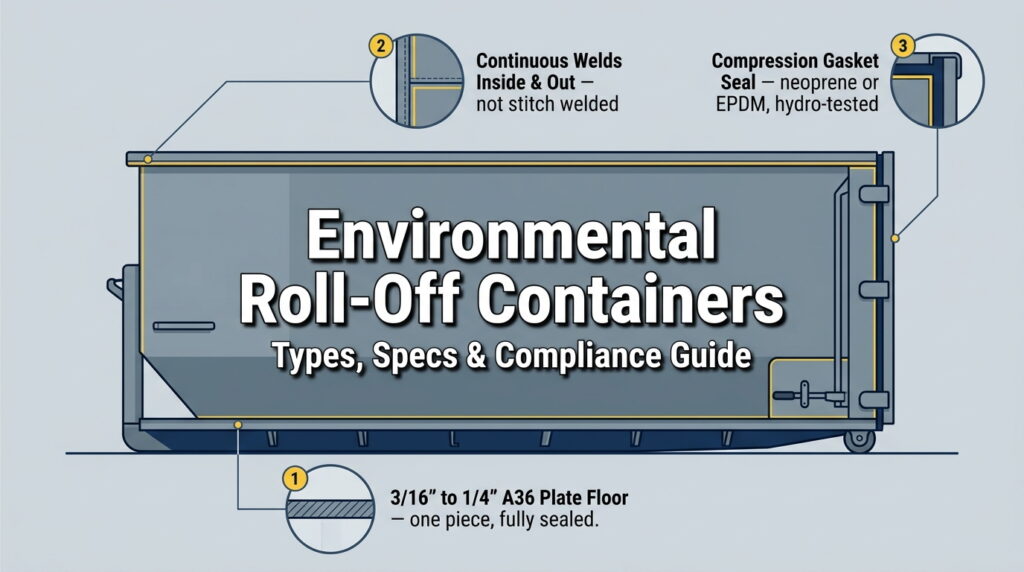
An environmental roll-off container is a fully sealed, watertight, vapor-tight steel container built to haul liquids, sludges, contaminated soils, and regulated waste without leaking a drop into the environment. It is not a standard open-top with a tarp. It is a pressure-tested vessel with continuous inside-and-out welds, gasketed doors, and a floor built to hold liquid the way a swimming pool holds water. If your waste stream would fail an EPA Method 9095B Paint Filter Liquids Test, or if a state regulator, plant safety officer, or landfill operator has told you “you need a sealed box,” this is the equipment they mean.
We have been fabricating these units in St. Gabriel since the late 1990s, and the buyers who call us are almost always working through the same short list of questions. What actually makes a container “environmental.” Which type fits the waste on the ground. Which specs matter and which are marketing. What the regulations require of the generator, not just the hauler. This is that answer.
What Makes a Container “Environmental” (and Why a Standard Roll-Off Is Not One)
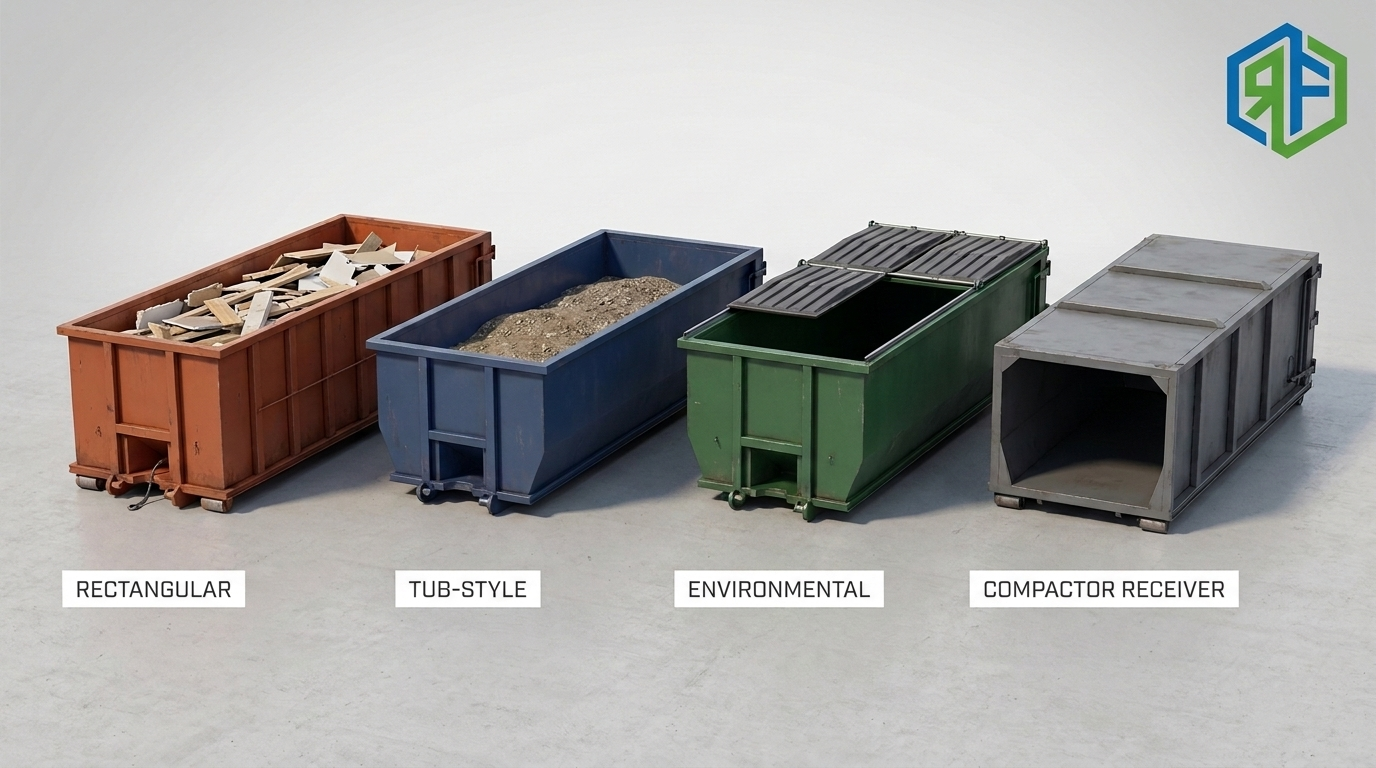
The word “environmental” is doing real work here. A standard open-top rectangle roll-off is built for construction debris, scrap, and dry municipal waste. Seams are stitch-welded. The floor is plate steel over cross-members, but it is not sealed. Water gets in, water gets out. That is fine for shingles and drywall. It is a violation waiting to happen for anything wet, hazardous, or regulated.
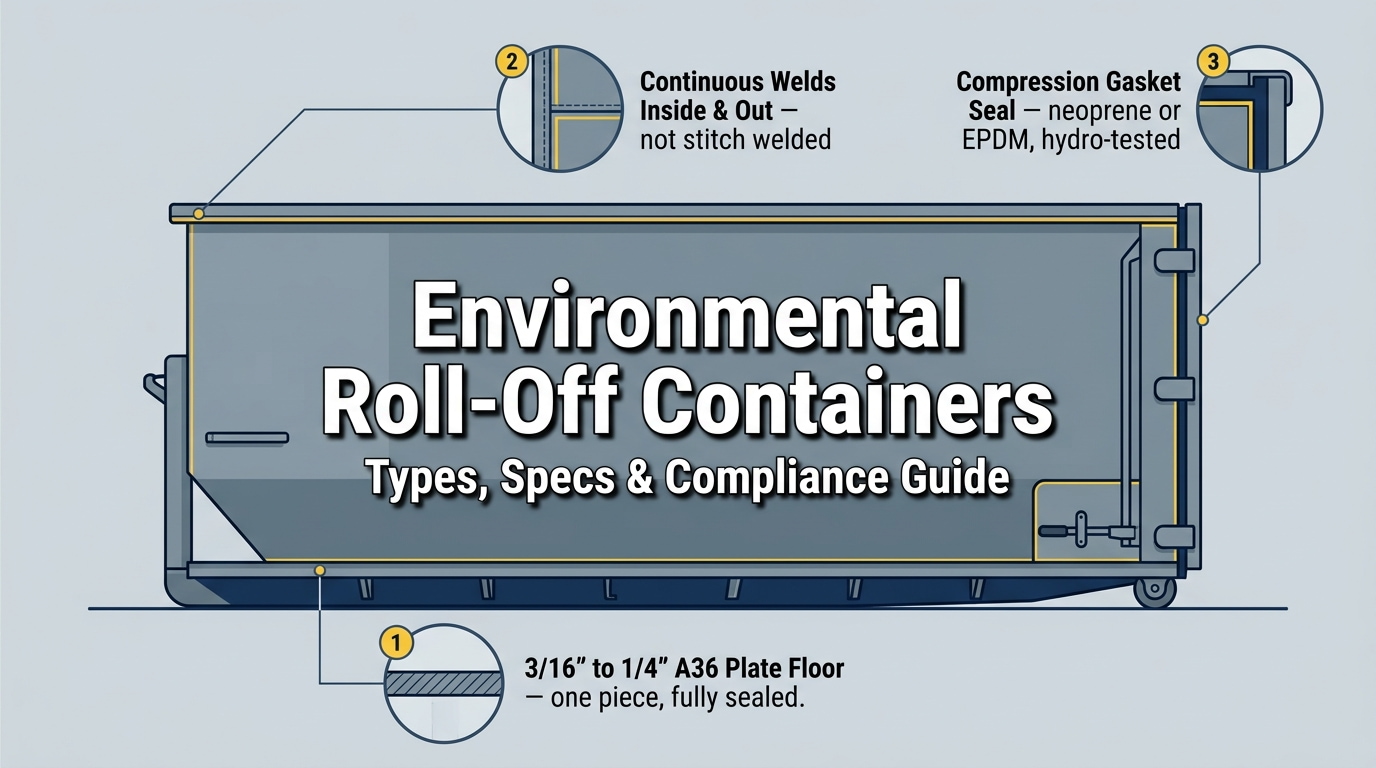
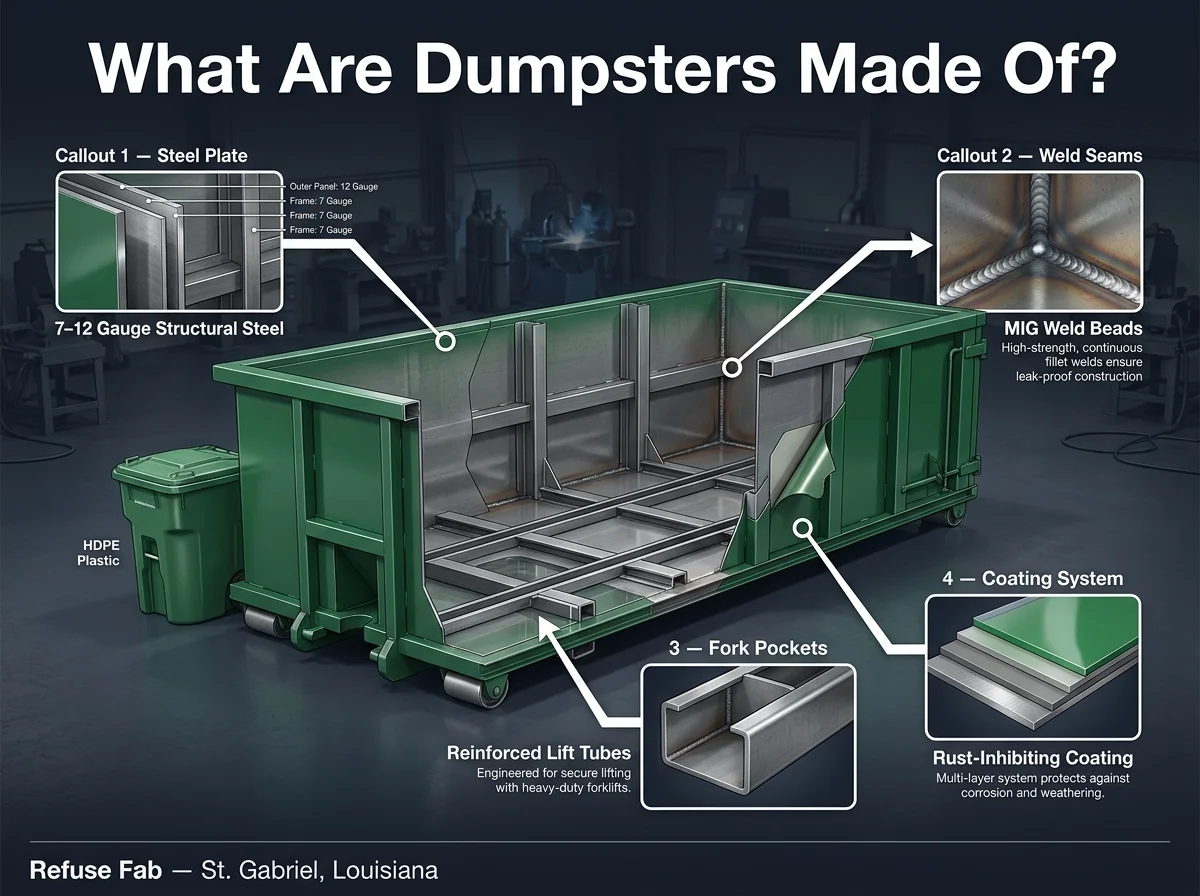
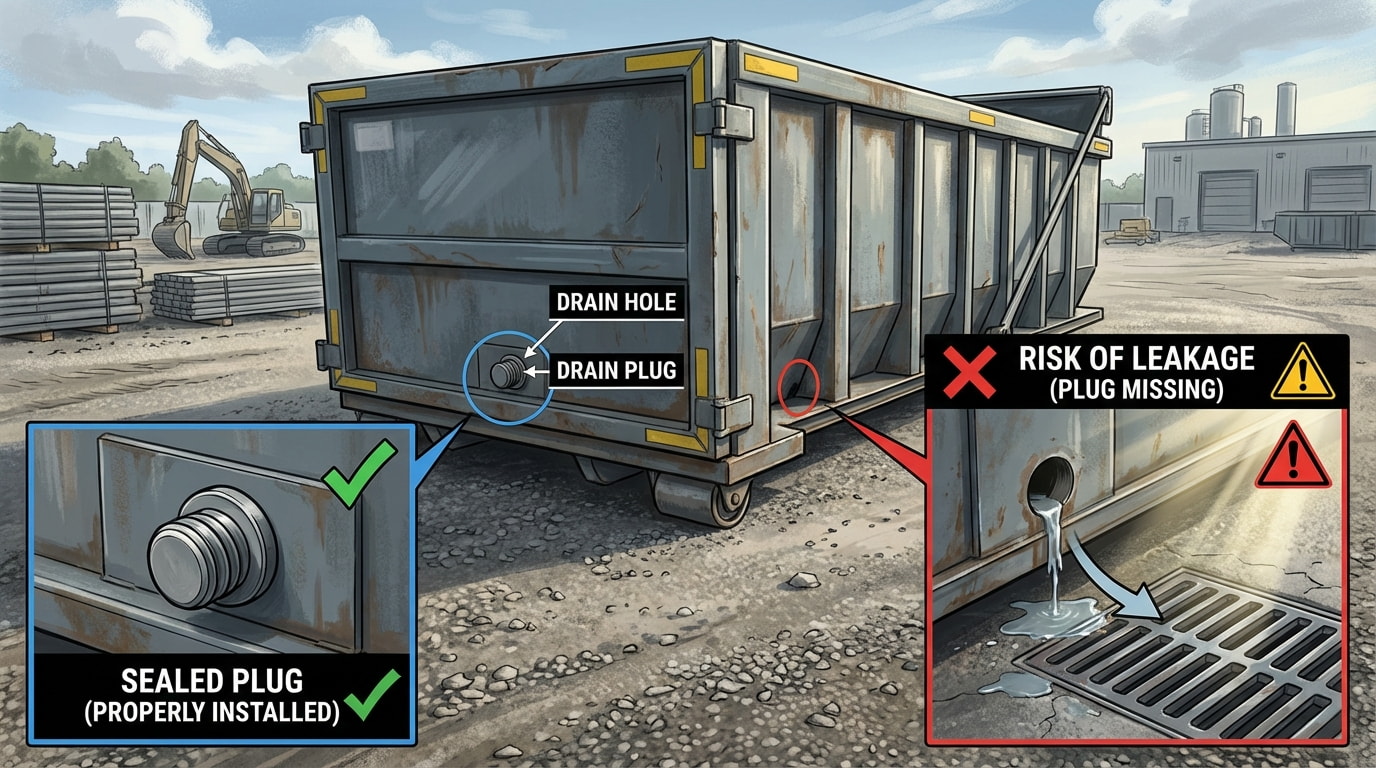
An environmental container is built to a different standard from the frame up. Every seam inside and out gets a continuous weld, not intermittent tacks. The floor is one-piece A36 steel plate, typically 3/16 inch, stepped up to 1/4 inch for aggressive service. Sidewalls run 10-gauge as standard and 7-gauge when the waste has any real abrasion or corrosion behind it. Rear doors seal against a compression gasket, either neoprene or EPDM depending on the chemistry, and lock down with a cam-and-groove or wedge system that pulls the door tight enough to hold hydrostatic pressure. Before a unit leaves our yard it gets water-tested. We fill it. We watch it. If it weeps anywhere, it goes back to the weld booth.
That is the mechanical definition. The regulatory definition matters just as much. Under 40 CFR 260.10, a “container” for hazardous waste purposes is any portable device in which a material is stored, transported, or otherwise handled. The moment your waste is characterized as hazardous, or the moment a landfill or treatment facility says “no free liquids,” the container has to meet a spec that a standard open-top cannot pass. That is the line environmental containers are built to sit on the right side of.
Which Environmental Container Type Fits Your Waste Stream
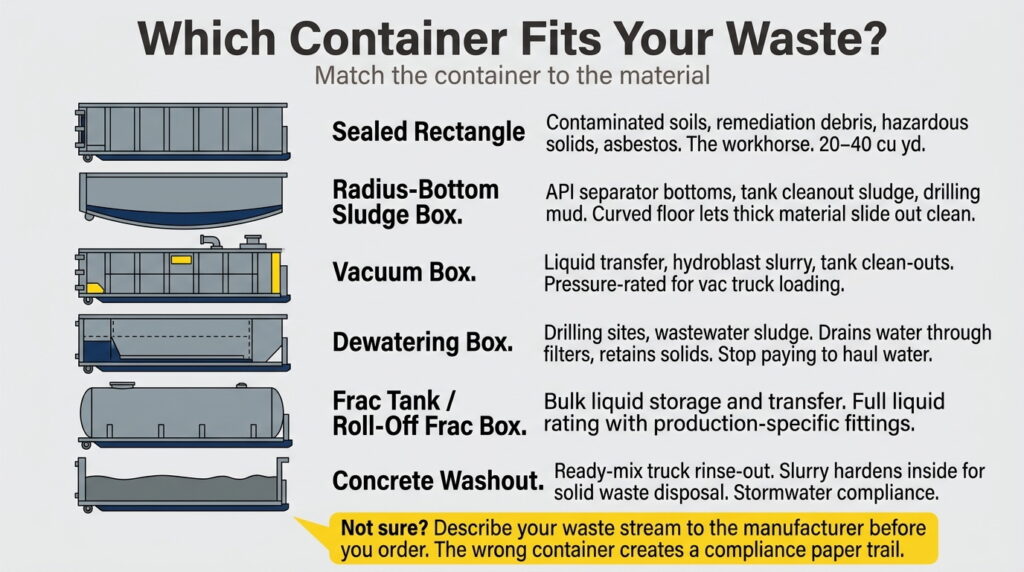
Buyers get in trouble when they order by size instead of by waste characteristic. The container has to match the material. Here is how we walk through it on the phone.
Sealed rectangle roll-offs are the workhorse. Straight sidewalls, flat floor, gasketed rear door, sizes typically 20 to 40 cubic yards. Right for contaminated soils, remediation debris, characteristic hazardous solids, asbestos under NESHAP 40 CFR Part 61 Subpart M, and any dry-to-damp regulated waste that has to travel sealed. Most of what leaves our shop for the refineries and terminals along the Mississippi River is a variant of this.
Radius-bottom sludge boxes have a curved floor instead of a flat one. That curve does two things: it lets thick sludge slide out cleanly when the box is tipped, and it eliminates the corner seams where liquid loves to sit and pit the steel. If you are hauling API separator bottoms, tank cleanout sludge, drilling mud, or anything with the consistency of wet concrete, this is the shape you want. Trying to move sludge in a flat-floor box is how operators end up chipping product out with pry bars.
Vacuum boxes are pressure-rated vessels, not just sealed containers. They are built to be pulled onto by a vacuum truck, which means the walls have to resist collapse under negative pressure. Reinforced construction, vacuum-rated fittings, and typically a rear door engineered for the pressure differential. Used for liquid transfer, hydroblast slurry recovery, and tank clean-outs where a vac truck is loading and offloading through the box.
Dewatering boxes solve a different problem: too much water in the waste. They have internal filter panels, a perforated false floor, or a filter-fabric-lined interior that lets water drain out (into a controlled system, not the ground) while solids stay behind. Common on drilling sites, industrial wastewater sludges, and any operation where you are paying to haul water you do not need to haul.
Frac tanks and roll-off frac boxes are for bulk liquid storage and transfer. Larger volume, full liquid rating, often with specific fittings for the frac or production application. Different animal from a sealed rectangle, but they sit in the same environmental family.
Concrete washout containers are their own category. They hold wet concrete slurry from ready-mix truck rinse-outs so the material can harden and get disposed of as solid waste rather than being dumped on the ground. Straightforward in construction but essential for any jobsite trying to comply with stormwater rules.
If you are not sure which type your waste stream needs, the honest answer is to describe the material to a manufacturer before you order. The wrong container is worse than no container: it creates a paper trail of a non-conforming vessel handling regulated waste, and that paper trail follows the generator, not just the hauler.
The Specs That Actually Matter (and the Ones That Do Not)
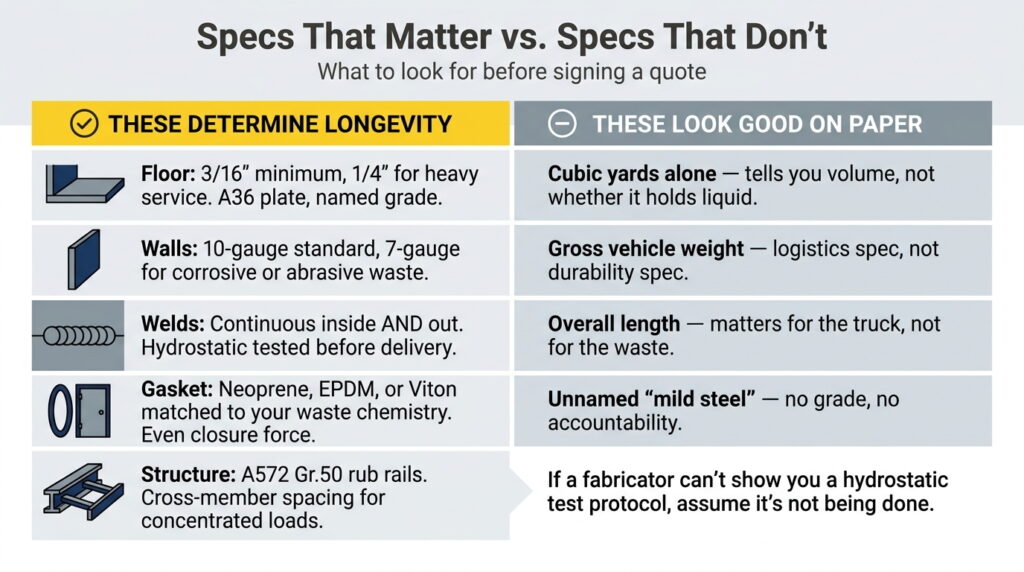
Every catalog on the internet lists cubic yards, length, and gross weight. Those numbers matter for logistics, but they do not tell you whether the box will hold up in service. These are the specs a buyer should be pulling out of a quote before signing anything.
Floor thickness and material. 3/16 inch A36 plate is a reasonable baseline for environmental service. 1/4 inch is what you want for heavy sludge, drill cuttings with rock, or anything where a wheel loader will be working inside the box. Anything thinner than 3/16 in an environmental unit is a red flag. Ask for the plate grade too. A36 is standard structural, and it holds up. Unnamed “mild steel” is a shrug.
Sidewall gauge. 10-gauge (roughly 0.135 inch) is the standard for sealed rectangles. 7-gauge (roughly 0.180 inch) is what we upgrade to for corrosive or highly abrasive waste. Thinner walls save money on the invoice and cost it back in dents, punctures, and premature retirement.
Weld quality. Continuous, not stitched. Inside and outside. This is the single most common failure point on a “watertight” container from a low-bid fabricator: stitched welds on the interior corners that pass a visual walk-through and fail a water test at 18 months. If a shop cannot show you a hydrostatic test protocol, assume it is not being done.
Gasket material and door system. Neoprene for general service, EPDM for anything with ozone or UV exposure sitting in a yard, Viton for aggressive solvents. The door has to pull tight enough to seat the gasket evenly across its full length. Cam-and-groove and wedge-lock systems both work; what matters is that the closure force is even and inspectable.
Rub rails and structural reinforcement. A572 Grade 50 rub rails on the sides protect the sidewalls from loader impact. Cross-member spacing under the floor determines how the box handles concentrated loads. These are boring specs. They are also what determines whether you own the unit for 5 years or 15.
Highway compliance dimensions. Standard environmental units run 88 inches wide to stay inside DOT width limits without a permit. If a vendor quotes a wider box, ask what your permitting exposure looks like before you sign.
What the Regulations Actually Require of You, the Generator
This is where a lot of environmental container content stops short. The buyer needs to know what the paperwork looks like, not just what the box looks like.
RCRA container standards. For hazardous waste, 40 CFR 264.171 through 264.178 (permitted facilities) and 265.171 through 265.178 (interim status) set the baseline. The container has to be in good condition, compatible with the waste (264.172), kept closed except when adding or removing waste (264.173), and inspected weekly for leaks and deterioration (264.174). Secondary containment applies for certain configurations under 264.175.
No liquids in landfills. 40 CFR 264.314 bars bulk or non-containerized liquid hazardous waste from land disposal. This is the rule that forces the Paint Filter Liquids Test (EPA Method 9095B) on suspect waste streams. If your container’s contents cannot pass paint filter at the gate, the landfill is legally required to turn the load away.
DOT transportation. 49 CFR Part 173 covers packaging for hazardous materials in transport. 49 CFR 172 covers placarding. If the container is moving a hazardous material on public roads, the container’s construction, closure, and marking all fall under DOT jurisdiction on top of RCRA.
NESHAP for asbestos. 40 CFR Part 61 Subpart M requires asbestos-containing waste to be in leak-tight containers with specific labeling. A sealed rectangle roll-off with a gasketed rear door and the right placarding meets that standard; a tarped open-top does not.
OSHA HAZWOPER. 29 CFR 1910.120 covers worker protection at hazardous waste operations, which includes the loading and unloading of these containers. That is on the operator, not the container itself, but it is part of the same compliance picture.
Louisiana-specific overlays. For anyone working in our home state, LAC 33:V is the hazardous waste regulation set. It largely tracks RCRA but adds state-specific inspection and recordkeeping requirements: weekly inspections logged, container condition documented, records held for at least three years. Covers fastened, no tears or gaps. These are the details a Louisiana DEQ inspector will actually ask to see.
If a vendor tries to sell you an environmental container without being able to explain any of the above, you are talking to a broker, not a manufacturer.
Why We Build Ours the Way We Do
We are in St. Gabriel, which puts us inside the stretch of the Mississippi River that carries most of the country’s petrochemical production. The buyers we serve are refineries, chemical plants, terminals, remediation contractors, and the environmental services companies that support them. Those customers do not tolerate warranty runarounds, and they do not have time for containers that fail hydrostatic testing after two years in service.
That is why every environmental container we ship gets continuous welds inside and out, one-piece plate floors, water-tested seals before it leaves the yard, and steel we can trace to mill certs. It is also why we build to custom spec more often than we build to catalog. If the waste stream calls for a stainless liner, or a specific gasket compound, or a door engineered for a client’s existing vac truck connection, that is a conversation we can have on the phone and turn into steel in the shop. Most of our work is one-off or short-run for a specific application, which is the opposite of how the national brands operate.
If you want to talk through a specific waste stream and figure out what unit actually fits, call the shop at (225) 715-4698 or email sales@refusefab.com. Bring the waste characterization sheet if you have one. We will tell you what we would build and what we would not.
Frequently Asked Questions
What is the difference between an environmental roll-off container and a standard roll-off?
A standard roll-off has stitch-welded seams and an unsealed floor. It is built for dry construction and demolition debris. An environmental roll-off is fully welded inside and out, has a gasketed rear door, and is hydrostatically tested to hold liquids without leaking. It is built for regulated waste, sludges, contaminated soils, and anything that has to travel sealed.
How do you know if your waste needs a sealed container?
Two triggers. First, if the waste is characterized as hazardous under RCRA, you need a container that meets 40 CFR 264 or 265 subpart I standards. Second, if the waste contains free liquids that would fail EPA Method 9095B Paint Filter Liquids Test, no landfill will accept it in a standard open-top under 40 CFR 264.314. Either trigger means environmental container.
What sizes do environmental roll-off containers come in?
Standard sizes run from 10 cubic yards up to 40 cubic yards for sealed rectangles, with vacuum boxes and frac units running larger. Width stays at 88 inches to meet DOT highway limits without a permit. Length and height vary by capacity.
How much does an environmental roll-off container cost?
Environmental units typically run $15,000 to $50,000 depending on size, wall gauge, floor plate thickness, gasket material, door system, and any custom features like stainless liners or specialty fittings. Standard open-tops are $4,000 to $8,000 for comparison. The price gap reflects the plate steel, continuous welding labor, and testing.
What regulations apply to environmental roll-off containers?
RCRA (40 CFR 260 through 265) for hazardous waste container standards, DOT (49 CFR 173 and 172) for transportation and placarding, NESHAP (40 CFR 61 Subpart M) for asbestos, OSHA HAZWOPER (29 CFR 1910.120) for worker protection during handling, and state regulations like Louisiana’s LAC 33:V for state-specific inspection and recordkeeping.
Can environmental containers be used for non-hazardous waste?
Yes. Many buyers use them for waste that is non-hazardous but still needs to travel sealed: contaminated soils that fail leachate testing, sludges with free liquids, industrial process residuals, or any material the receiving facility will not accept in an open-top. Environmental containers are also common for stormwater compliance on construction sites where runoff control matters.
How often should environmental containers be inspected?
Weekly at minimum under RCRA 40 CFR 264.174, with the inspection logged and records retained. Louisiana LAC 33:V holds records for at least three years. Inspection covers the container’s condition, closure integrity, and any signs of leaks or deterioration. Damaged units have to be repaired or the waste transferred to a compliant container.
What is the lead time to build a custom environmental roll-off container?
Lead time depends on the spec and current shop load. For a standard sealed rectangle in a common size, we are typically in the 4 to 8 week range. Custom builds with unusual dimensions, specialty materials, or non-standard fittings run longer. If you have a plant turnaround or a project deadline driving the timeline, tell us up front and we will tell you honestly what we can hit.