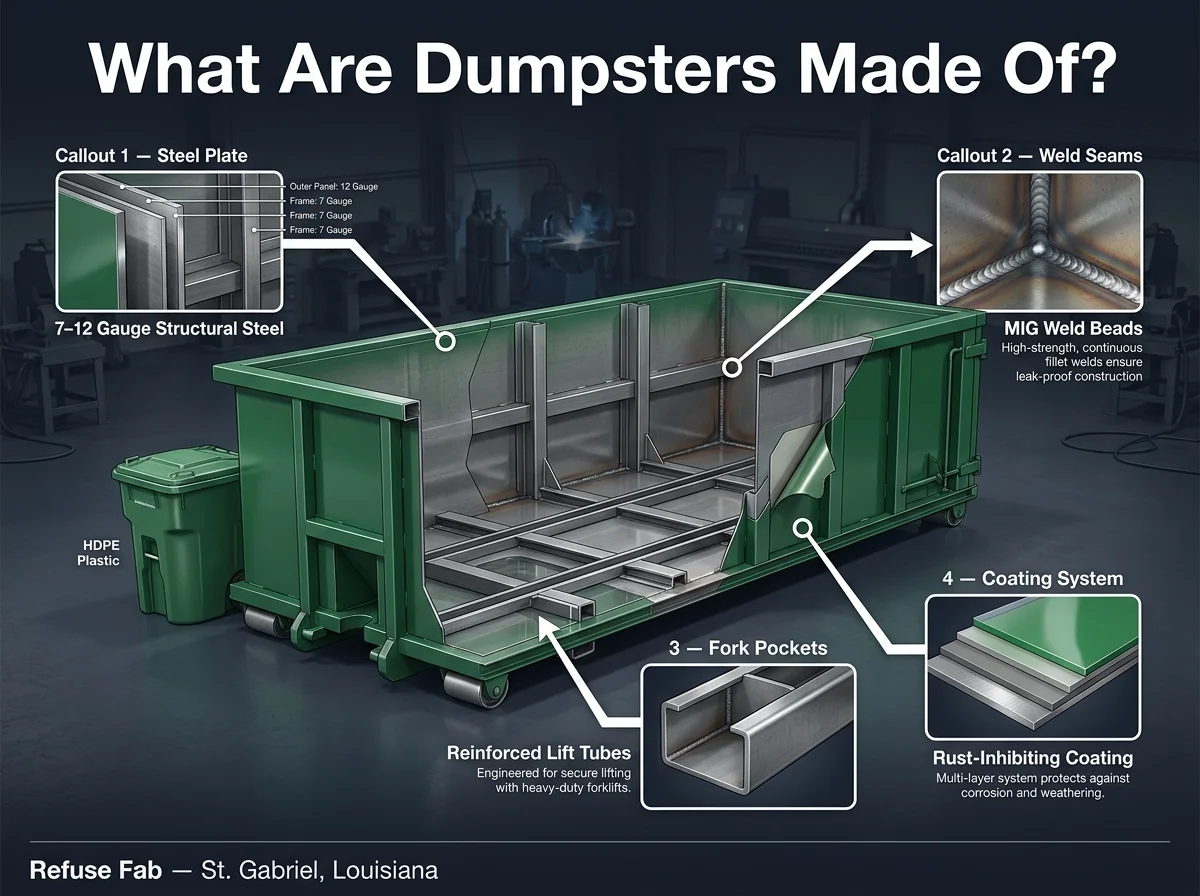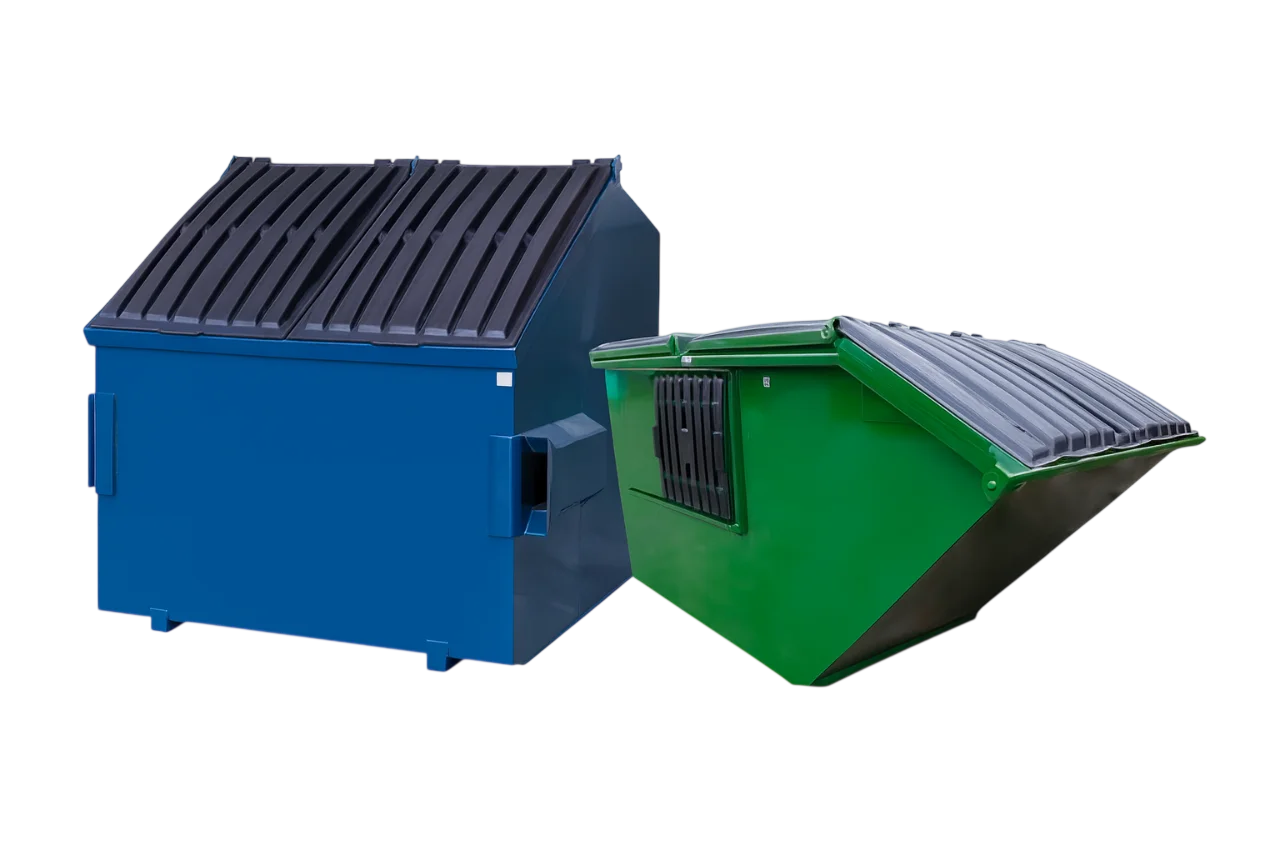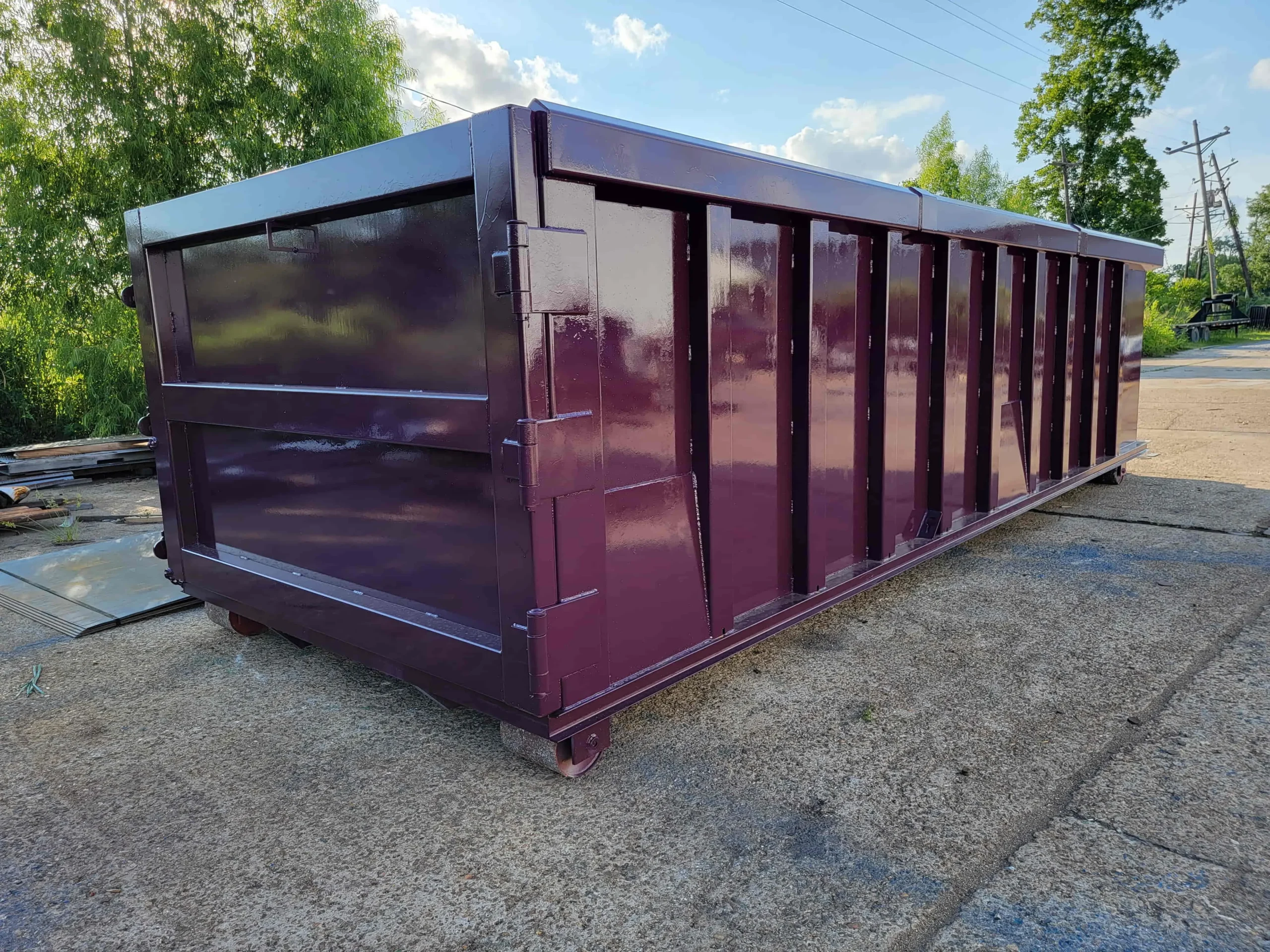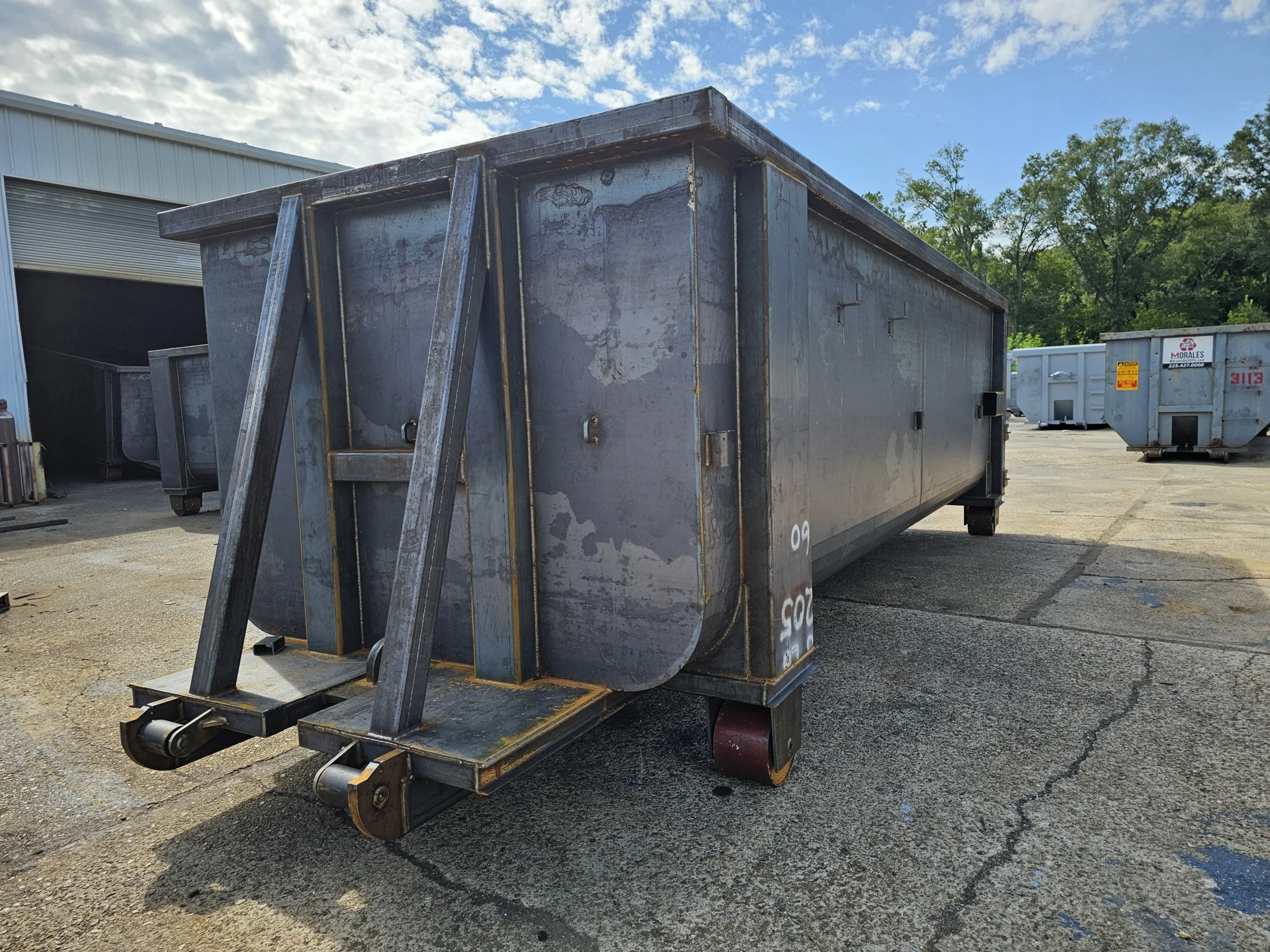
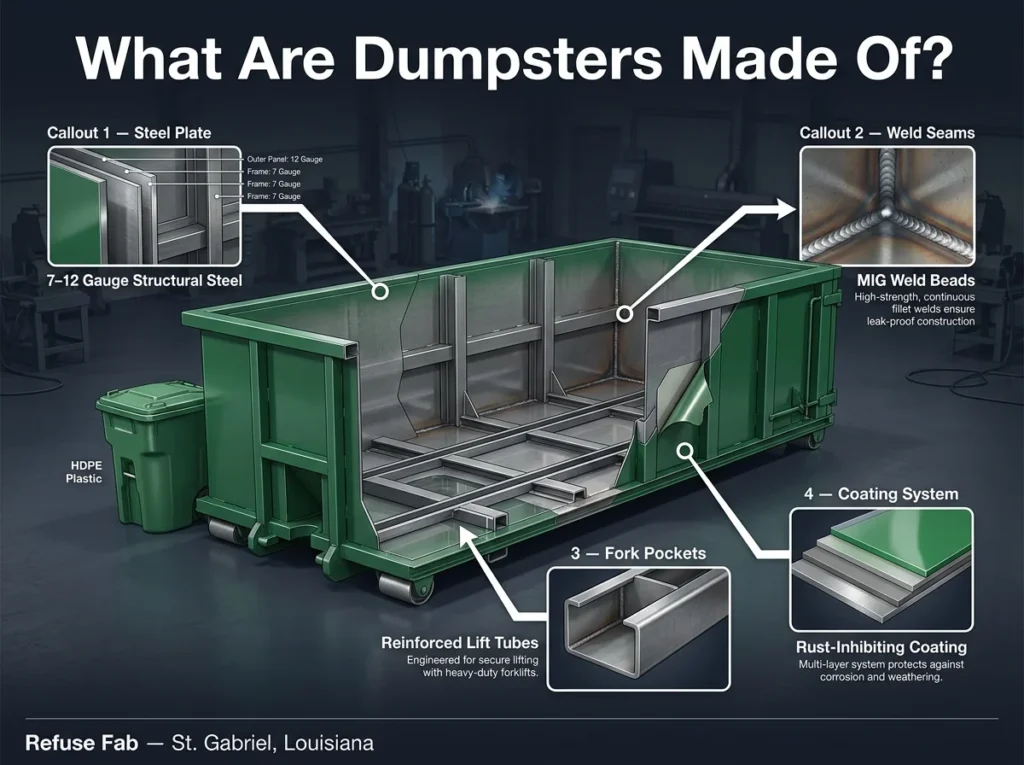
Most dumpsters are made from heavy-duty steel specifically structural steel plate ranging from 7 to 12 gauge in thickness depending on the application. Smaller commercial bins are often made from high-density polyethylene (HDPE) plastic. Roll-off containers used on construction sites are almost always welded steel because nothing else can handle the weight, the impact, or the rough conditions.
You’ve seen them on every job site, behind every restaurant, and at the end of every renovation. But have you ever wondered what actually goes into building a dumpster, what materials, what thicknesses, what makes one last 20 years and another fall apart in two?
At Refuse Fab, we don’t just rent containers, we manufacture them from the ground up at our facility in St. Gabriel, Louisiana. We weld every seam, select every sheet of steel, and build every roll-off to handle real-world abuse. Here’s exactly what dumpsters are made of and why the material decisions matter more than most people realize.
The Two Primary Materials: Steel and HDPE Plasticz
Walk through any waste management yard and you’ll see two dominant types of dumpster material: steel and high-density polyethylene (HDPE) plastic. These aren’t interchangeable — each has a specific role, and the right choice depends entirely on how the container will be used.
| Steel (Structural) Roll-offs & heavy-duty containers ✔ PROS • Handles any weight or debris • Lasts 10–20+ years • Weldable & repairable • Pest-proof and tamper-resistant • 100% recyclable at end of life ✘ CONS • Heavier to transport • Can rust if coating wears • More expensive upfront | HDPE Plastic Residential & commercial bins ✔ PROS • Lighter — easier to move • Rust-proof by nature • Quieter when emptied • Easy to clean & sanitize ✘ CONS • Can crack in extreme cold • Can’t handle sharp/heavy debris • Not repairable if wall cracks • Not suitable for roll-offs | Modular Steel + Liner Specialty & collapsible units ✔ PROS • On-site repairable • Lighter than full steel • Collapses for storage & shipping ✘ CONS • Not for construction debris • Liner can be punctured • Less common, limited supply |
Steel Dumpsters: The Industry Standard for Heavy Work
When most people picture a dumpster especially a roll-off container on a construction or demolition site — they’re picturing a steel container. And there’s good reason for that. Steel is the only material capable of handling the full range of what those containers encounter.
What kind of steel is used?
Not all steel is equal. Dumpster manufacturers use structural steel plate typically A36 or equivalent — cut, shaped, and welded into the final container shape. The key variable is gauge, which describes the thickness of the steel sheet. Thicker gauge = thinner number = stronger material.
| Gauge | Thickness | Typical Use | Example |
| 7-gauge | 0.187″ | Container floors / bottoms | Roll-off base plate, highest wear area |
| 10-gauge | 0.135″ | Side walls (heavy-duty) | Construction & demolition containers |
| 12-gauge | 0.105″ | Side walls (standard) | General commercial roll-offs |
| 14-gauge | 0.075″ | Lids & lighter panels | Front-load commercial bins |
How steel dumpsters are built
Manufacturing a steel dumpster is a multi-step fabrication process, not just bending some metal and calling it done. Here’s what actually happens in the shop:
- Steel plate selection: Sheets are chosen by gauge based on the container’s intended use — heavier for construction roll-offs, standard for commercial front-loads.
- Cutting and shaping: Plates are cut to spec using plasma or laser cutting equipment, then bent or pressed into the wall and floor panels using a brake press.
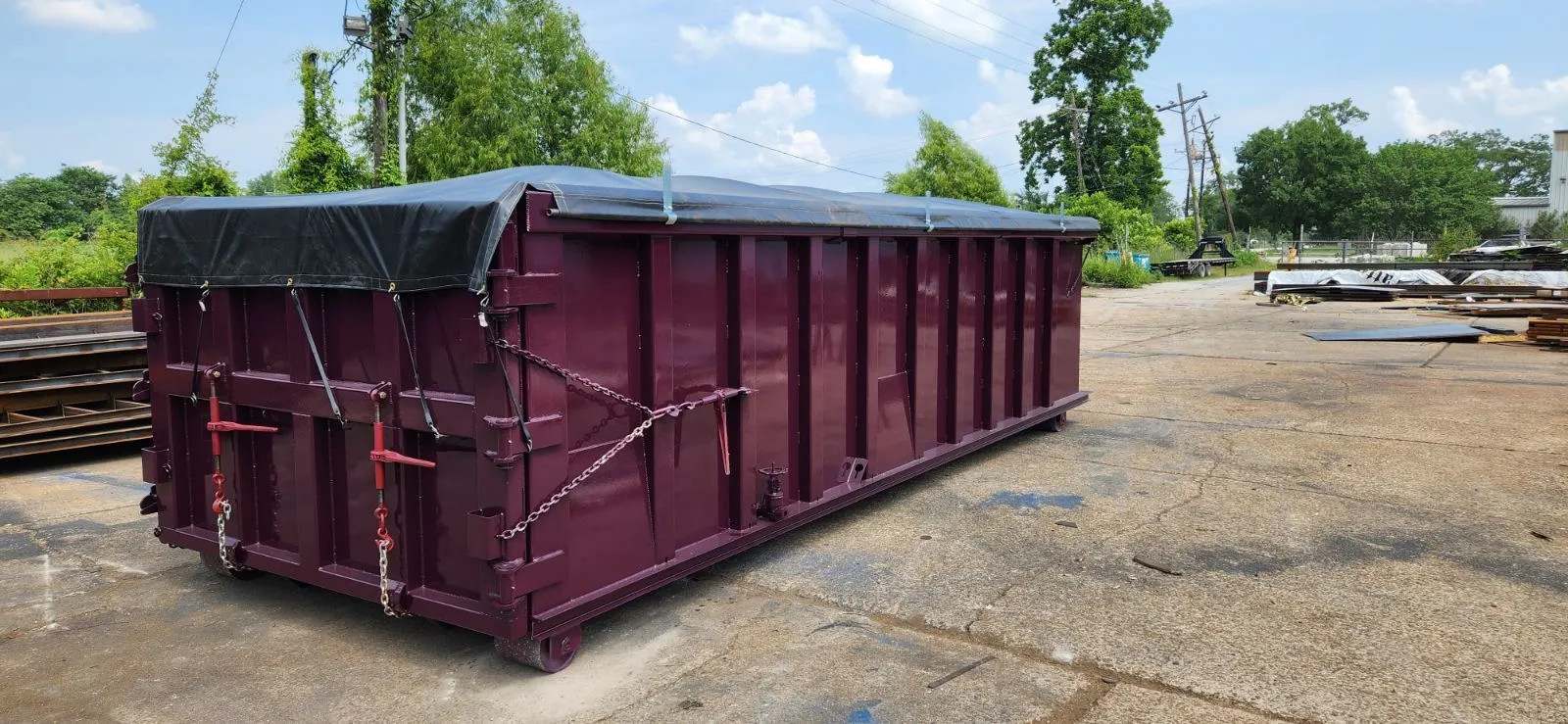
- Welding: Panels are MIG or flux-core welded together at every seam. Weld quality is everything, a poorly welded corner joint is where containers fail first. Full-penetration welds are standard on heavy-duty containers.
- Reinforcement: Top rails, cross-members, fork pockets, and corner gussets are added for structural rigidity. These aren’t decorative they’re what allow the container to be lifted, loaded, and dropped repeatedly without warping.
- Finishing: The container is cleaned, primed, and coated typically with a rust-inhibiting primer followed by enamel or powder coat paint. In coastal environments like Louisiana, additional zinc or galvanized coatings are used to fight salt-air corrosion.
Beyond the Material: Key Structural Components
Whether steel or plastic, a properly built dumpster is more than just the body. Here are the components that determine how a container performs in real use:
- Fork pockets (lift tubes): Steel channels welded to the underside of roll-off containers that allow truck forks to engage and lift the container. These must be precisely positioned and heavily reinforced, they take the full weight of the loaded container every time it’s picked up.
- Ground rollers: Steel rollers on the underside that allow the container to slide on and off the truck bed without dragging and damaging the frame. Roller quality directly affects how smoothly trucks can place and retrieve containers.
- Top rail (top cap): A continuous piece of angle iron or square tube welded around the top perimeter of the container. This stiffens the walls, prevents racking, and gives the container its shape under load.
- Doors and latches: Roll-off containers typically have one or two swing-out rear doors with heavy-duty pin hinges and latch bars. Door seals and latch quality determine whether liquid-tightness is achievable, critical for containers handling wet waste.
- Paint and coating system: The first line of defense against rust. A well-applied primer and topcoat system adds years to a container’s life. In high-humidity and coastal environments, zinc-rich primers make a significant difference.
Frequently Asked Questions
What are dumpsters made of?
Most dumpsters are made from heavy-duty structural steel plate, typically ranging from 7 to 12 gauge in thickness. Roll-off containers used on construction and demolition sites are almost universally steel. Smaller commercial and residential bins are often made from high-density polyethylene (HDPE) plastic, which is rust-proof, lightweight, and quieter than steel.
Why are roll-off dumpsters made of steel instead of plastic?
Construction and demolition debris — concrete, rebar, roofing materials, scrap metal is too heavy and sharp for plastic to handle. Steel is the only material that can withstand the repeated impact, weight, and abuse of a working job site. Plastic bins are suitable for lighter commercial and residential waste only.
How long do steel dumpsters last?
A properly manufactured and maintained steel roll-off container can last 15 to 20 years or more. Key longevity factors include weld quality, steel gauge, the quality of the paint and coating system, and how well the container is maintained. Containers with damaged coatings should be touched up promptly to prevent rust from spreading.
Does Refuse Fab manufacture custom roll-off containers?
Yes. Refuse Fab builds custom heavy-duty steel roll-off containers. We fabricate containers to spec for waste haulers, construction companies, and industrial operators. Call (225) 715-4698 or visit refusefab.com to request a quote.