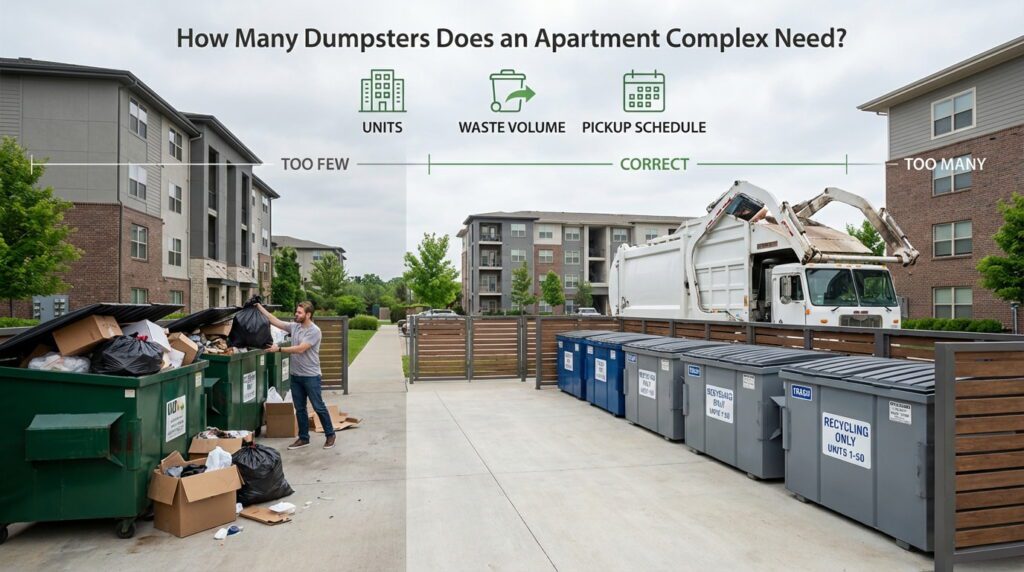
Plan for one 6- to 8-yard front-load dumpster per 25 to 30 units with weekly pickup. Each apartment unit generates roughly 0.5 to 1 cubic yard of trash per week, so the math is fairly straightforward. That said, pickup frequency, container size, tenant density, and recycling requirements all affect what your specific property actually needs and getting it wrong in either direction costs you.
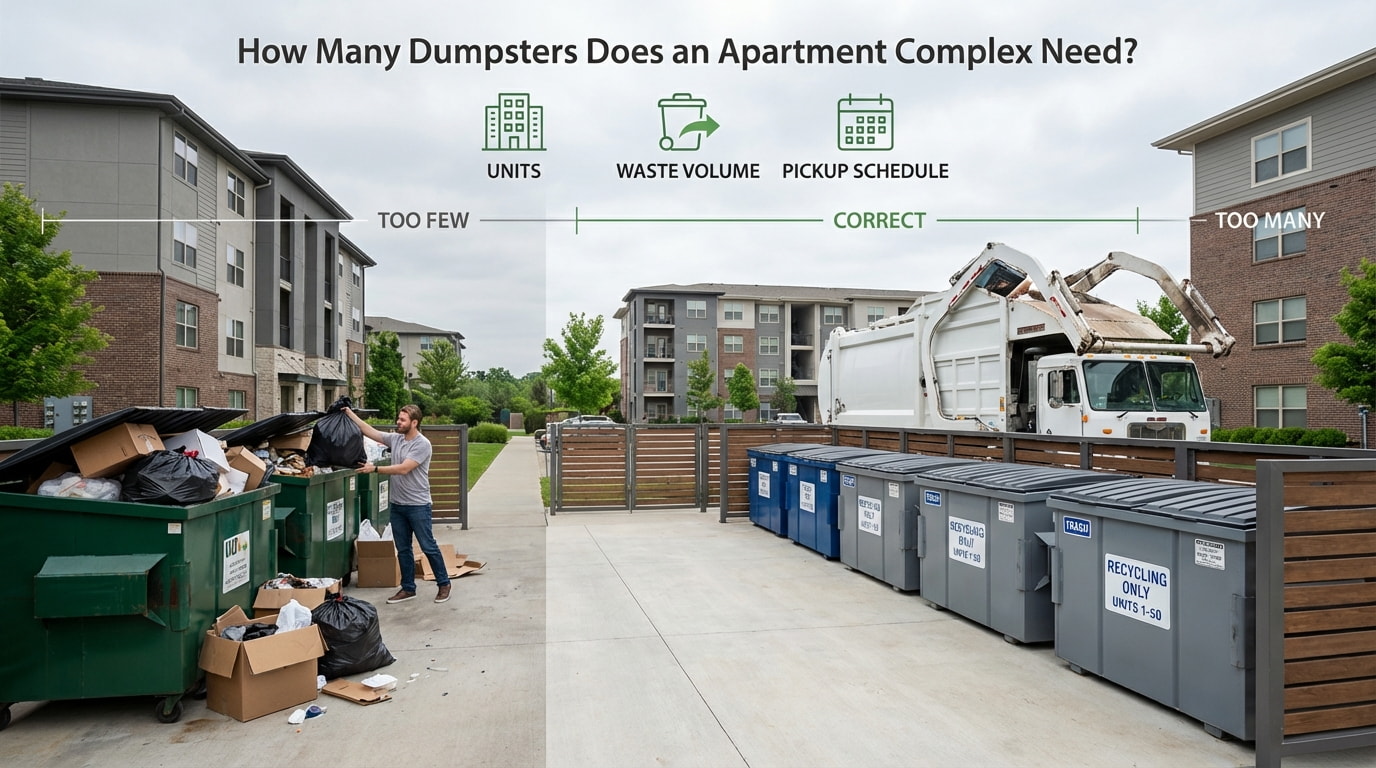
Too few dumpsters and you’re dealing with overflow, tenant complaints, and potential municipal code violations. Too many and you’re paying for capacity you’re not using and eating into your property’s usable space. Getting the container count right is one of those operational details that quietly affects both your budget and your tenant experience.
Here’s how to think through it the right way.
The Sizing Formula: Start Here
The industry standard starting point uses a simple formula:
| Number of units × weekly waste per unit = total weekly cubic yards needed Divide by container size × pickup frequency to get your container count |
In practice, most apartment units generate between 0.5 and 1 cubic yard of trash per week. Use 0.75 cubic yards as a reliable midpoint for a general-occupancy complex. Here’s what that looks like across different property sizes:
| Property size | Estimated weekly waste | Recommended setup (weekly pickup) |
| 10–20 units | 5–15 cu yds/week | One 6-yard container, or one 8-yard if space allows |
| 20–30 units | 15–22 cu yds/week | One to two 8-yard containers |
| 30–60 units | 22–45 cu yds/week | Two to three 8-yard containers |
| 60–100 units | 45–75 cu yds/week | Three to four 8-yard containers, or compactor consideration |
| 100+ units | 75+ cu yds/week | Multiple 8-yard containers or a commercial compactor system |
Variables That Change the Calculation
The formula gives you a starting point. These factors adjust it up or down for your specific property.
Tenant demographics and occupancy type
A complex full of young families generates more waste than a senior living community or a building with mostly single-occupant studios. High-turnover properties — college housing, short-term leasing often spike waste volume during move-in and move-out periods. If your tenant mix skews large-family or high-occupancy, add 15–20% to your baseline estimate.
Recycling and organics programs
If your municipality or HOA requires separate recycling or compost streams, those aren’t included in trash capacity. Each diversion stream needs its own dedicated container. Many properties undersize because they calculate total waste without accounting for the fact that recycling and trash must be separated.
Bulk waste and move-out debris
Standard dumpster calculations cover regular household trash. Furniture, mattresses, appliances, and construction debris from renovations aren’t typically allowed in front-load dumpsters and can’t be factored into weekly capacity. If your property experiences frequent tenant turnover, consider a separate roll-off solution for bulk items rather than expecting your regular containers to absorb that volume.
Space and site access
The right container count doesn’t help if your site can’t accommodate the containers and give the hauler’s truck enough clearance to service them. Front-load trucks need roughly 18–20 feet of overhead clearance and adequate approach space. If your property has tight access, you may be limited in container size regardless of what the formula says which affects how many you need.
What Type of Container Is Right for an Apartment Complex?
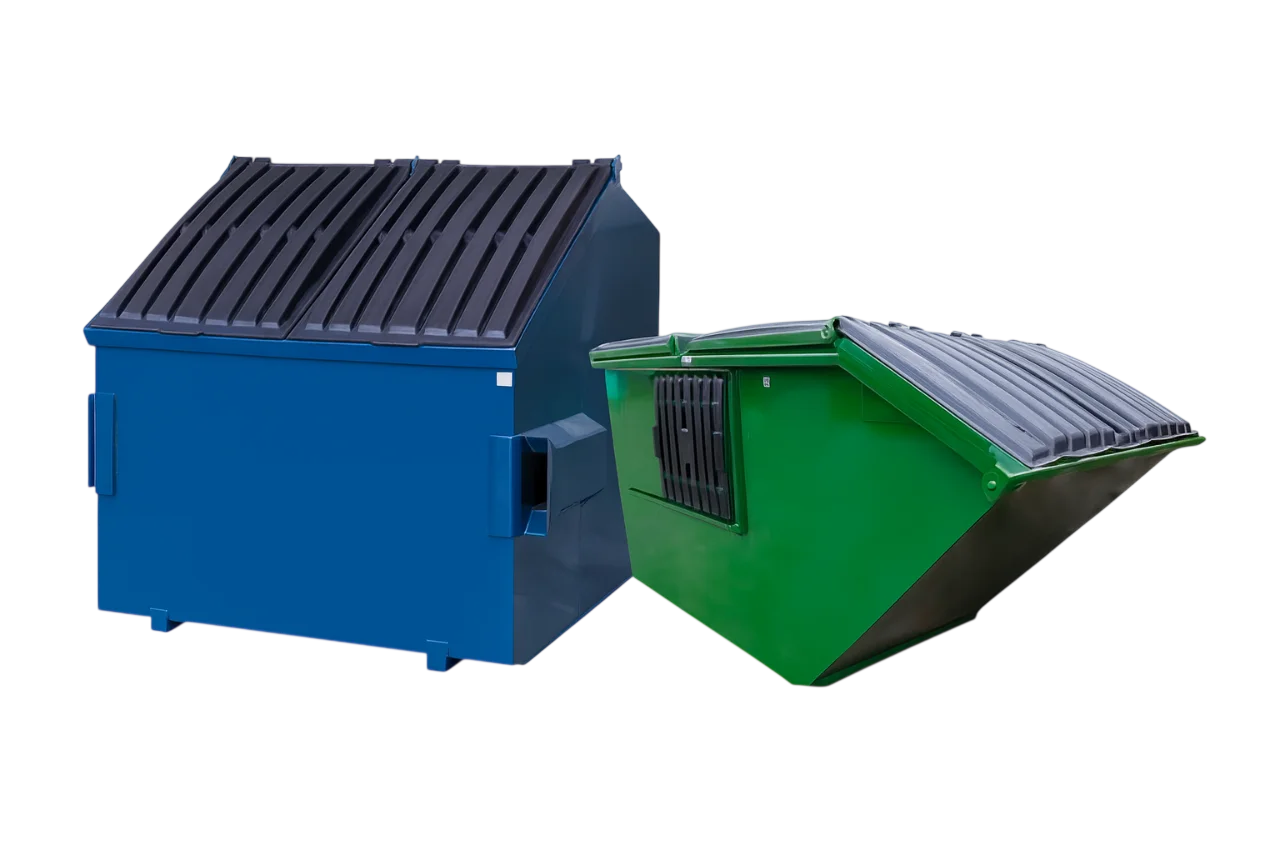
Most apartment complexes use front-load dumpsters — the rectangular steel containers you see in enclosures behind apartment buildings, emptied by a front-load truck that lifts the container over the cab and dumps it. They’re the industry standard for multifamily properties for a few practical reasons.
- Available in 2, 4, 6, and 8-yard sizes – scalable to virtually any property size.
- Designed for regular, frequent service – ideally suited to the weekly or twice-weekly pickup schedule most apartments run.
- Enclosure-compatible – most apartment properties have or can build a concrete block or wood enclosure around them for aesthetics and security.
- Lower cost per yard of capacity compared to roll-offs for ongoing, high-frequency use.
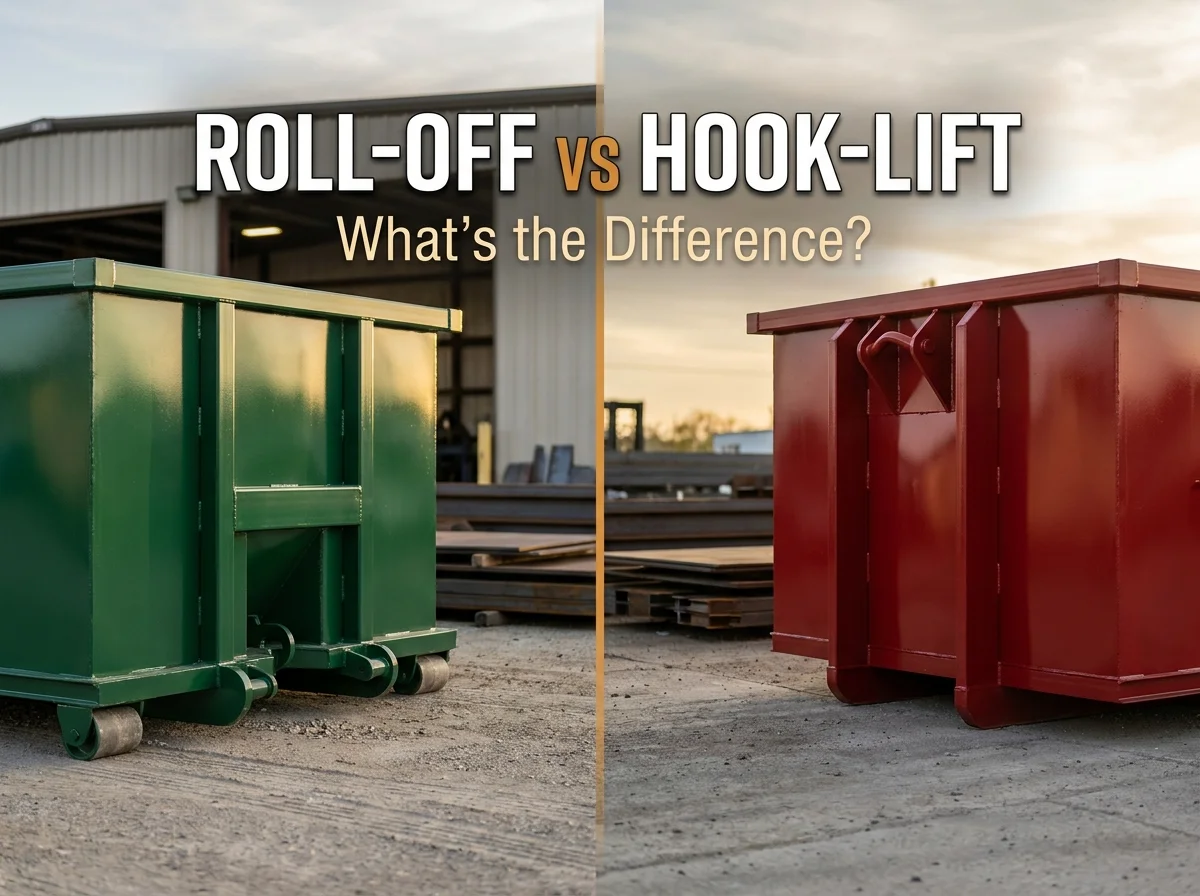
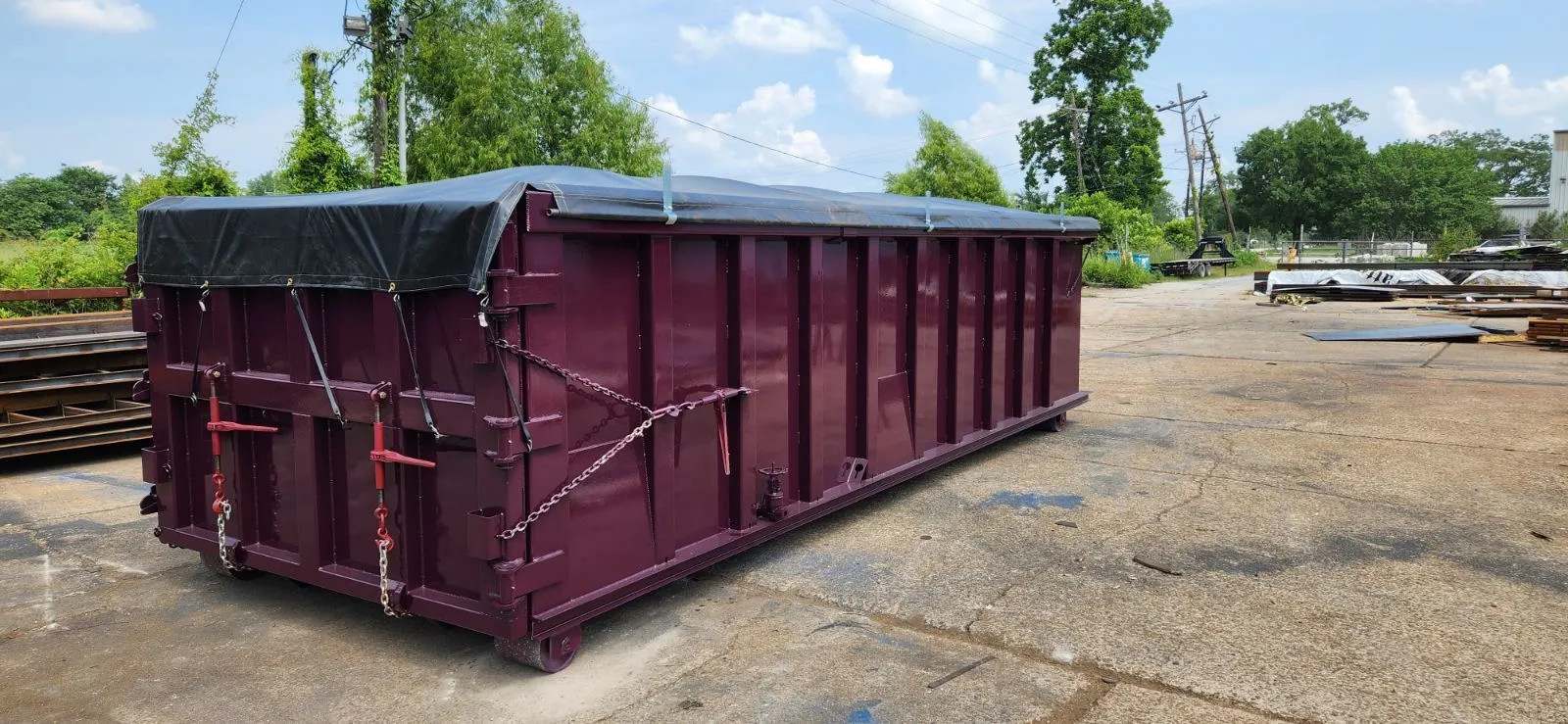
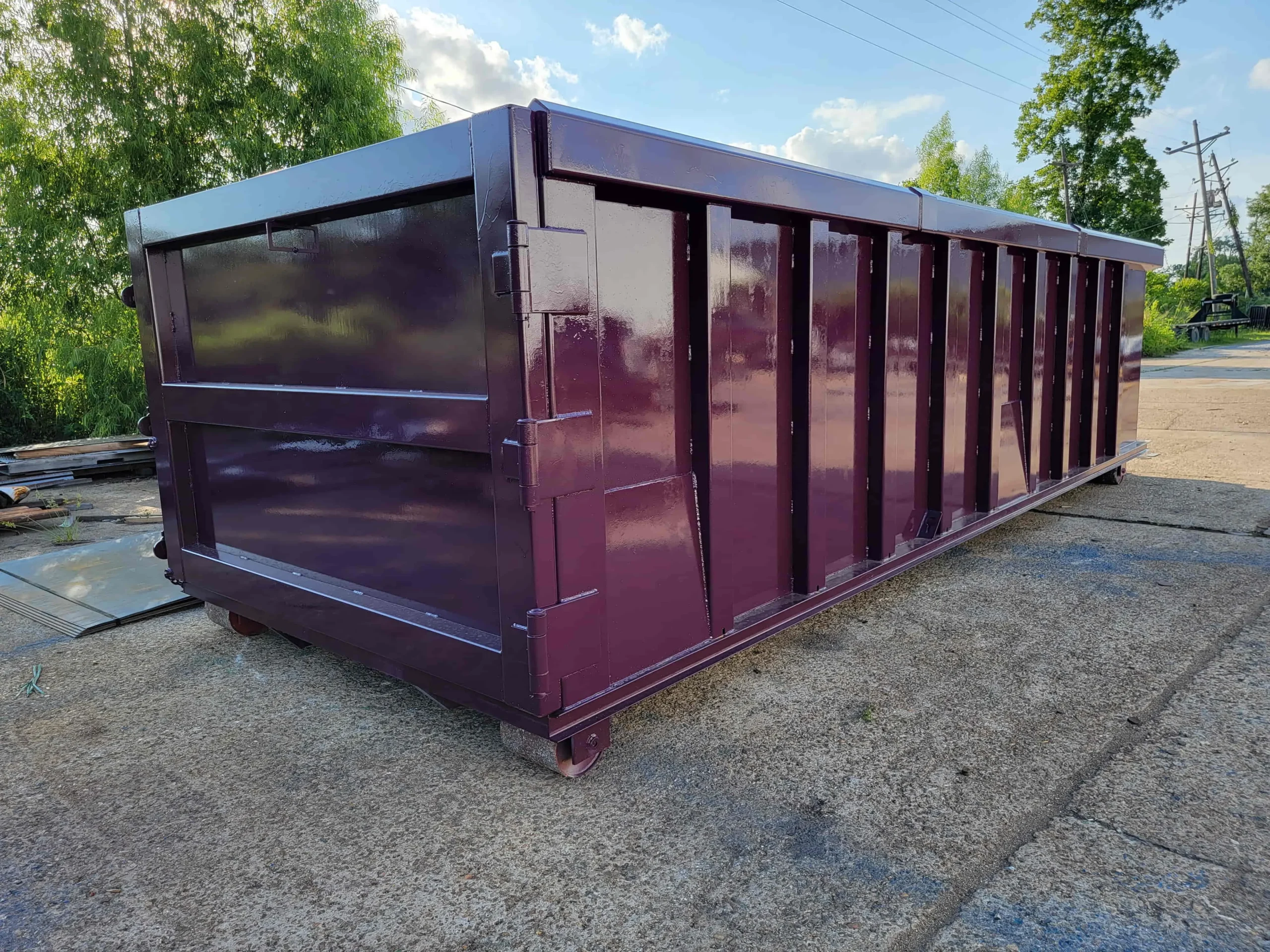
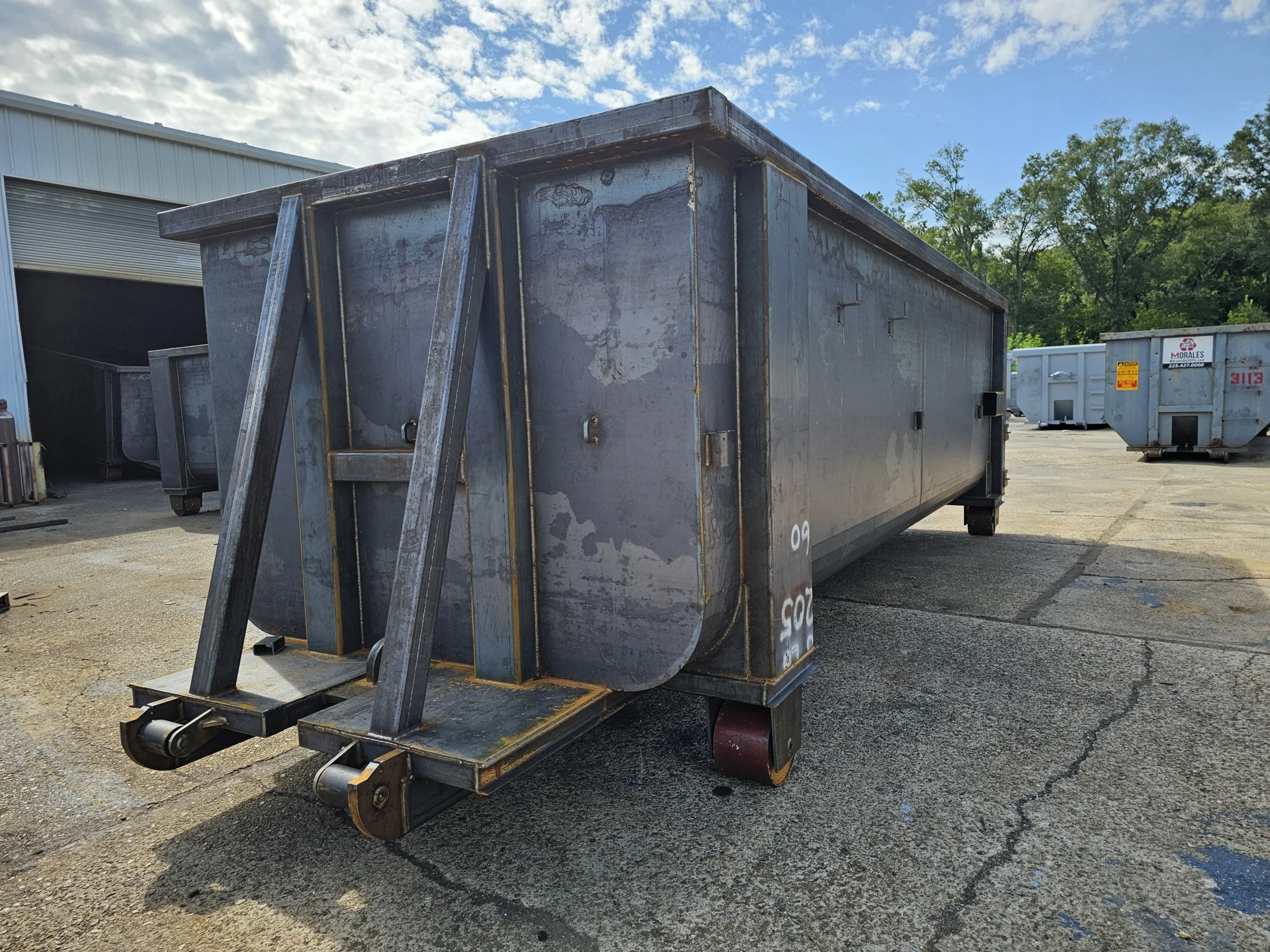
Roll-off containers are generally not the right solution for routine apartment trash, they’re better suited for renovation debris, large-scale cleanouts, or situations where you need a large one-time capacity. For ongoing residential waste management, front-load is the standard.
The Most Common Sizing Mistakes Apartment Properties Make
Sizing for best-case, not typical use
Operators sometimes calculate based on average winter waste when summer months, move-in season, or the holidays generate significantly more volume. Size for your peak weeks, not your lightest weeks. An overflowing dumpster before the next pickup creates immediate problems.
Ignoring code requirements
Many cities and counties have specific requirements for waste capacity per unit in multifamily housing. These aren’t recommendations, they’re minimums. Operating below the required capacity can result in code violations and fines. Before finalizing your setup, check with your local solid waste authority.
Forgetting enclosure dimensions
Properties sometimes select a container size only to find the enclosure won’t accommodate it, or the enclosure gates don’t allow truck access. Container selection and enclosure design need to happen together, not sequentially.
Frequently Asked Questions
Is there a legal minimum number of dumpsters for an apartment complex?
Yes, in most jurisdictions. Many cities and counties have ordinances specifying minimum waste container capacity per residential unit for multifamily housing. These requirements vary significantly by location, some are based on cubic yards per unit per week, others on container count per building. Contact your local solid waste or sanitation authority to confirm what applies to your property before finalizing your setup.
Should dumpsters be spread across the property or centralized?
For smaller properties (under 30 units), a centralized location near the parking area typically works well. For larger properties, strategically distributed containers reduce how far tenants carry trash, which directly reduces overflow and illegal dumping in stairwells or common areas. Placement near building exits and away from unit windows and HVAC intakes is the practical ideal. Your hauler can advise on what their trucks can service efficiently.
What size dumpster should I order for an apartment complex renovation?
Renovation debris — drywall, flooring, fixtures, cabinets should go into a roll-off container, not your regular front-load dumpsters. A 10- or 15-yard roll-off handles most single-unit or small multi-unit renovations. For larger-scale building renovations, 20- to 30-yard roll-offs are standard. Don’t mix renovation debris into your regular waste stream. It overloads containers, may violate your hauling agreement, and often triggers overweight charges.