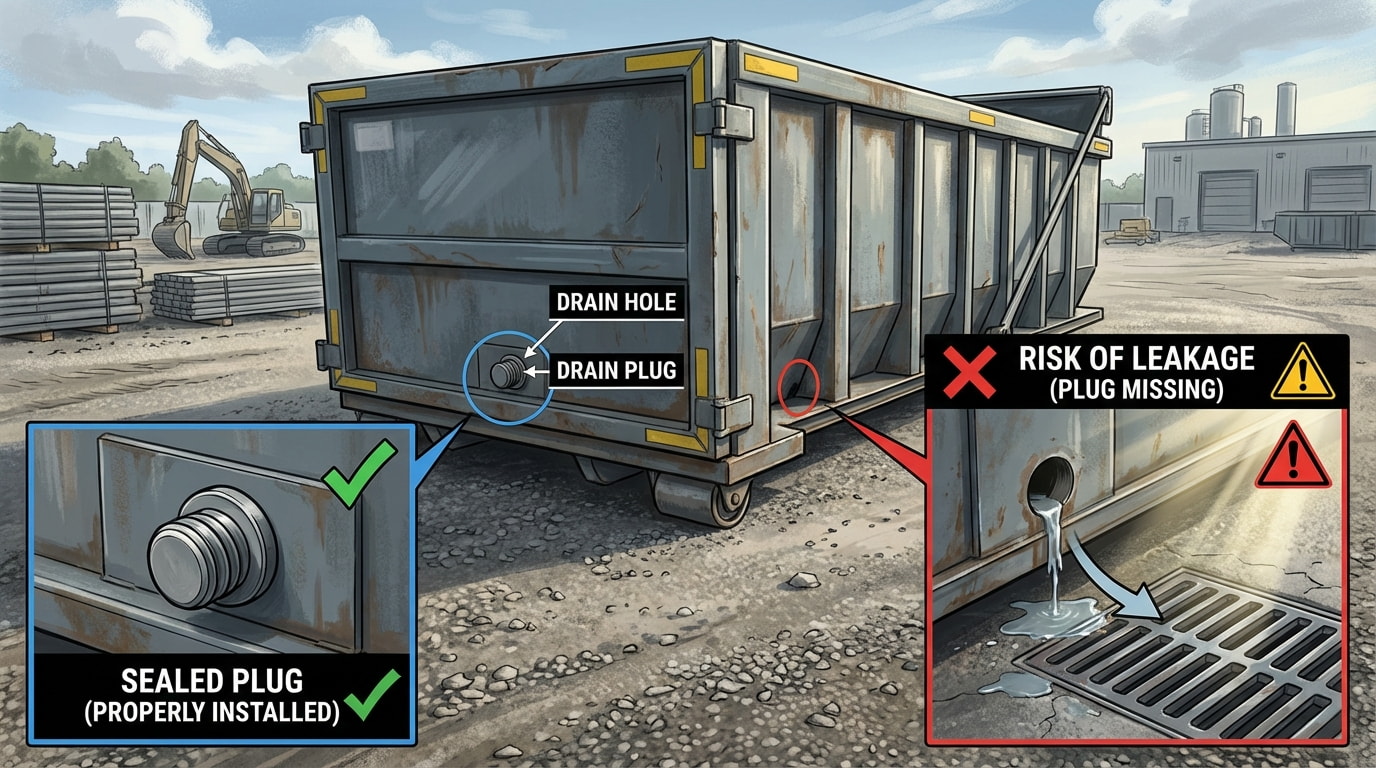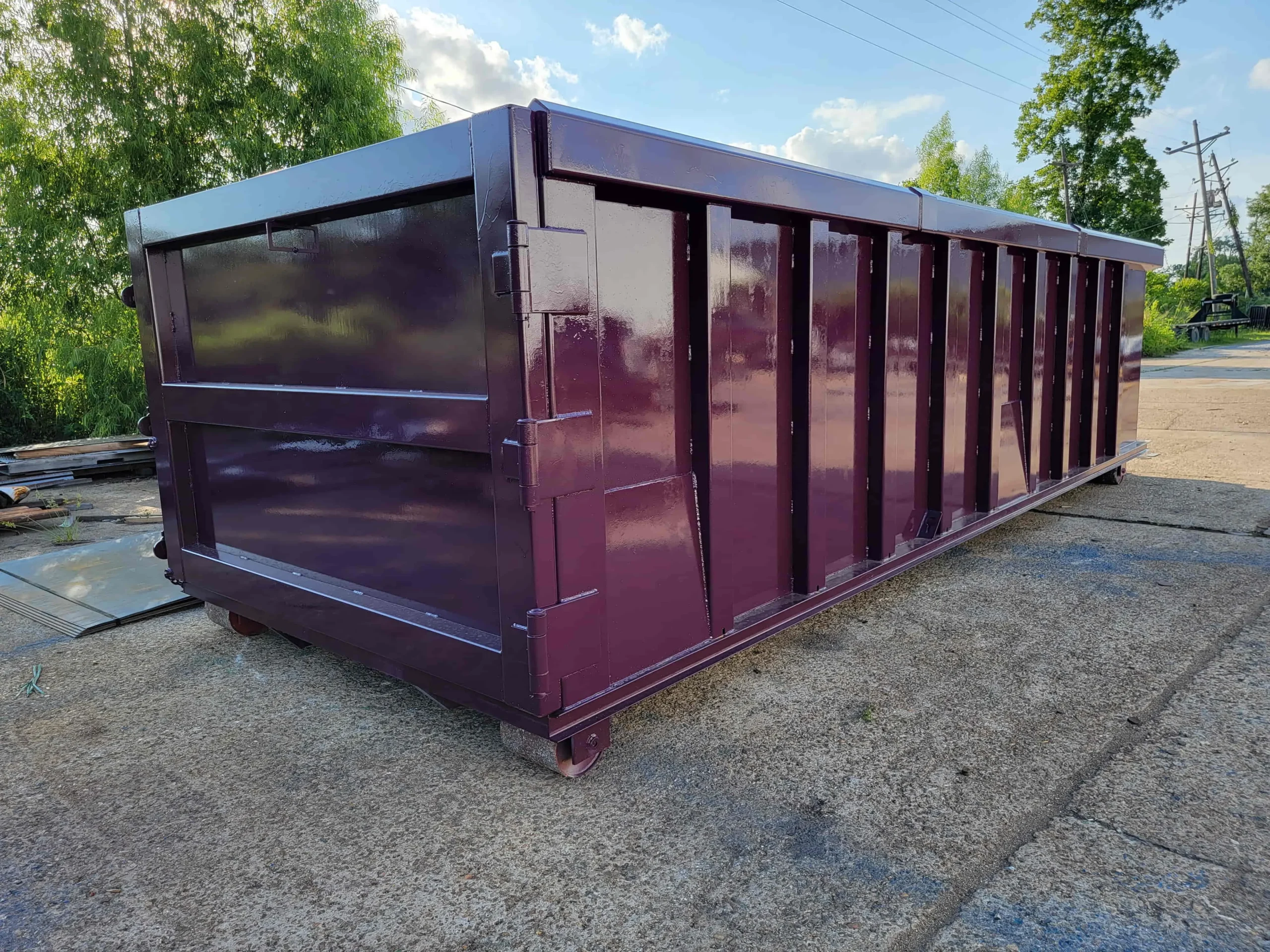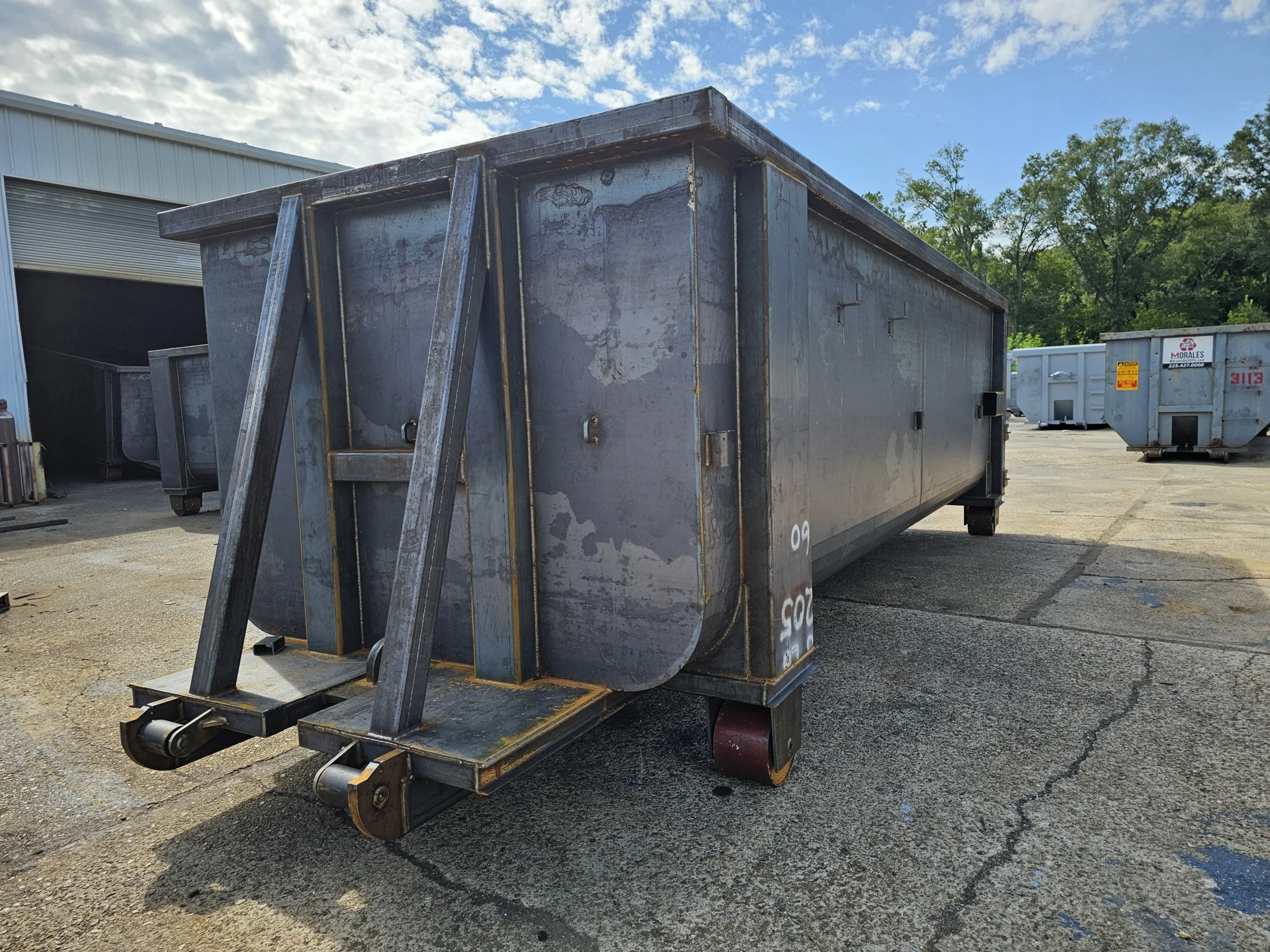
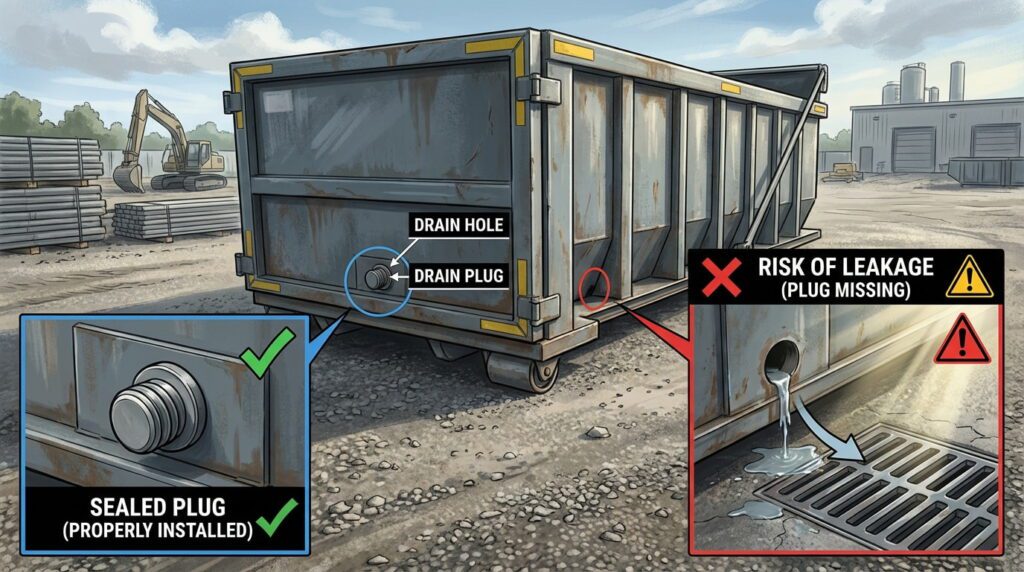
Yes, most commercial dumpsters do have drain holes. They’re located at the lowest point of the container — typically the rear bottom and are designed to let accumulated liquid drain out rather than pool inside. The catch: those holes are supposed to be sealed with a drain plug when the container is in use. A missing or open drain plug is one of the most common compliance and environmental issues in the waste industry.
It’s a surprisingly common question and an important one. Whether you’re renting a roll-off for a cleanout, managing a fleet of commercial containers, or buying containers for your waste hauling business, understanding how drain holes work (and when they can become a liability) is something every operator should know.
Why Dumpsters Have Drain Holes
Rain happens. Wet waste happens. Melting ice from food service businesses happens. Over time, liquid accumulates at the bottom of any container and that liquid creates real problems if there’s no way for it to escape.
Here’s what happens without a drain hole:
- Liquid-soaked waste becomes significantly heavier, sometimes exceeding weight limits for hauling trucks.
- Stagnant liquid at the bottom of a warm container generates powerful, persistent odors.
- Pooled liquid becomes a breeding ground for bacteria, insects, and in some climates, mold.
- Over time, standing liquid accelerates corrosion inside the container, shortening its usable life.
The drain hole solves these problems by letting that liquid out. It’s a practical design feature, not an oversight. On most roll-off containers, it’s located at the rear bottom corner where liquid naturally collects when the container is parked at a slight angle, which is typical on most job sites.
The Part Most People Overlook: The Drain Plug
A drain hole without a plug is where the real problems start. The hole is supposed to be sealed with a threaded drain plug when the container is deployed and in active use. That plug serves as the barrier between whatever liquid accumulates inside the dumpster and the ground, storm drains, or waterways around it.
In practice, drain plugs go missing constantly. They get stripped from the threads, broken during handling, left behind at a previous site, or simply never reinstalled after cleaning. The result is a dumpster that freely drains whatever liquid collects inside it — directly onto the ground or into nearby storm drain systems.
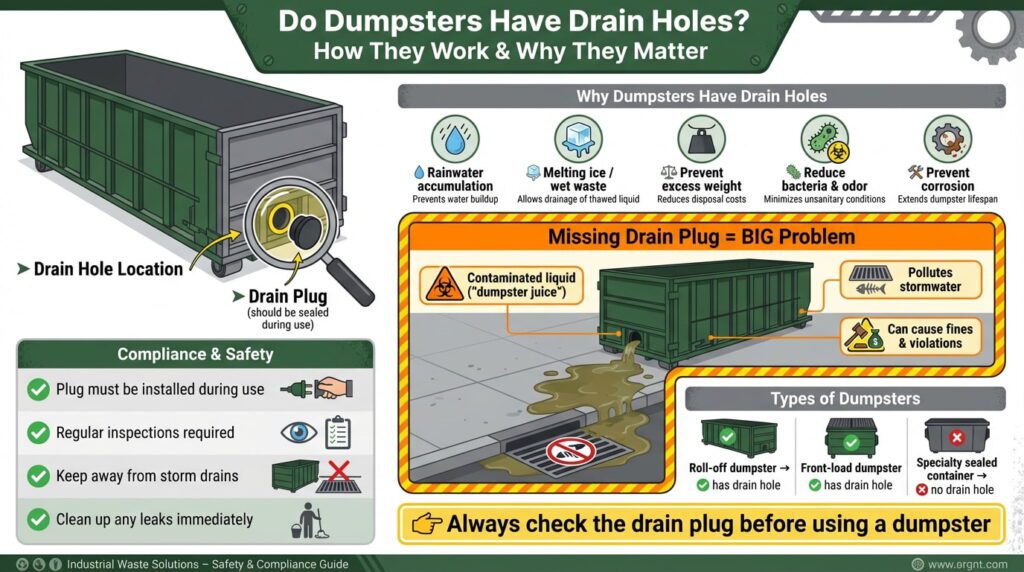
That liquid, often called “dumpster juice,” is a mix of rainwater, decomposing organic material, cleaning chemicals, and whatever else ends up in the container. It’s not something you want entering the stormwater system.
Why an Open Drain Plug Is a Regulatory Problem
This isn’t just a cleanliness issue. An unplugged dumpster draining contaminated liquid is a stormwater compliance problem in most jurisdictions in the United States.
The EPA’s Clean Water Act regulates what can and cannot enter storm drains and waterways. “Dumpster juice”— contaminated liquid from waste containers is considered a pollutant. Most municipalities and waste management regulations require:
- Drain plugs to be in place and functional whenever a container is in use.
- Any liquid that leaks or drains from a dumpster to be contained and not allowed to enter storm drains.
- Regular inspection of containers to ensure drain plugs are present and sealed.
- Cleanup of any contamination caused by dumpster leakage.
Waste haulers, businesses, and property owners can all face fines for stormwater violations caused by open or missing drain plugs. In some municipalities, a single complaint about a leaking dumpster can trigger an inspection and a citation.
Do All Dumpsters Have Drain Holes?
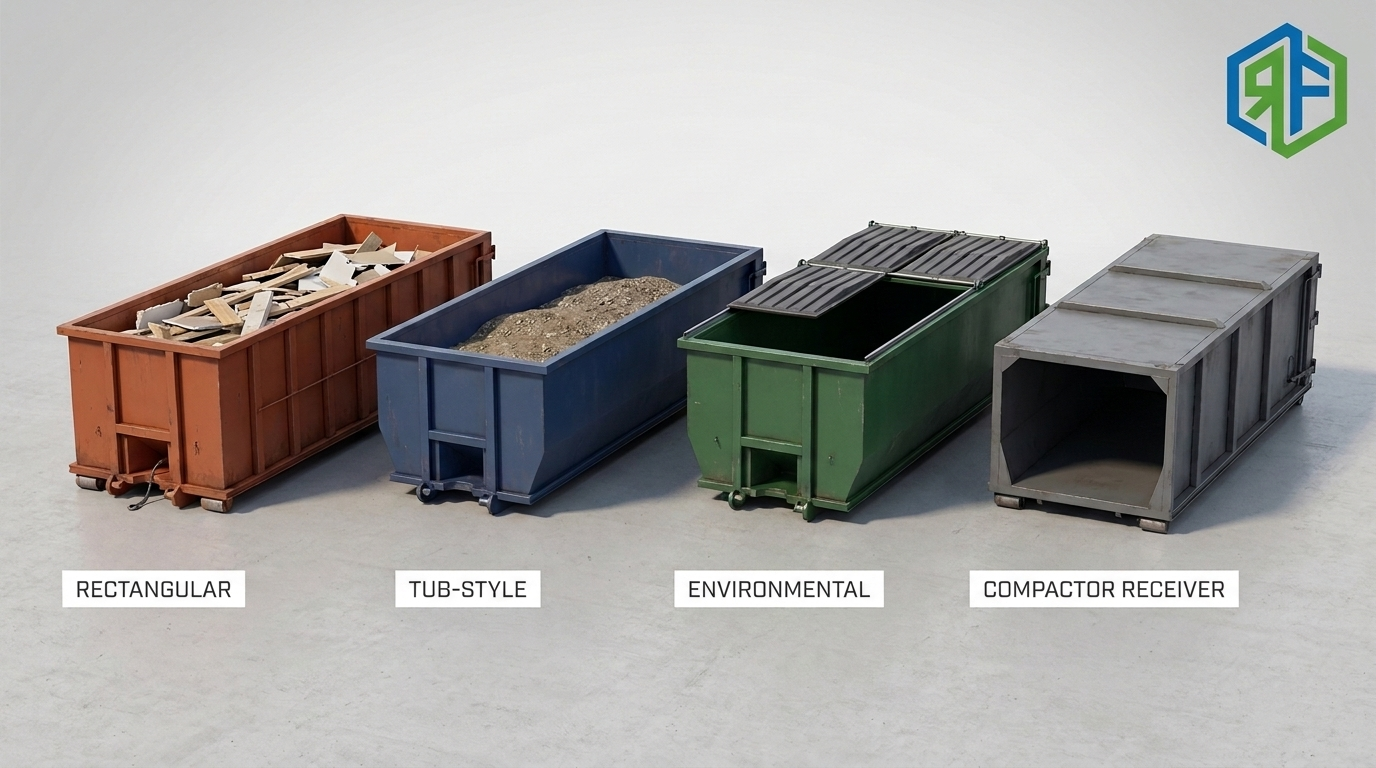
Most commercial roll-off containers and front-load dumpsters are manufactured with drain holes as a standard feature. However, there are exceptions based on container type and intended use.
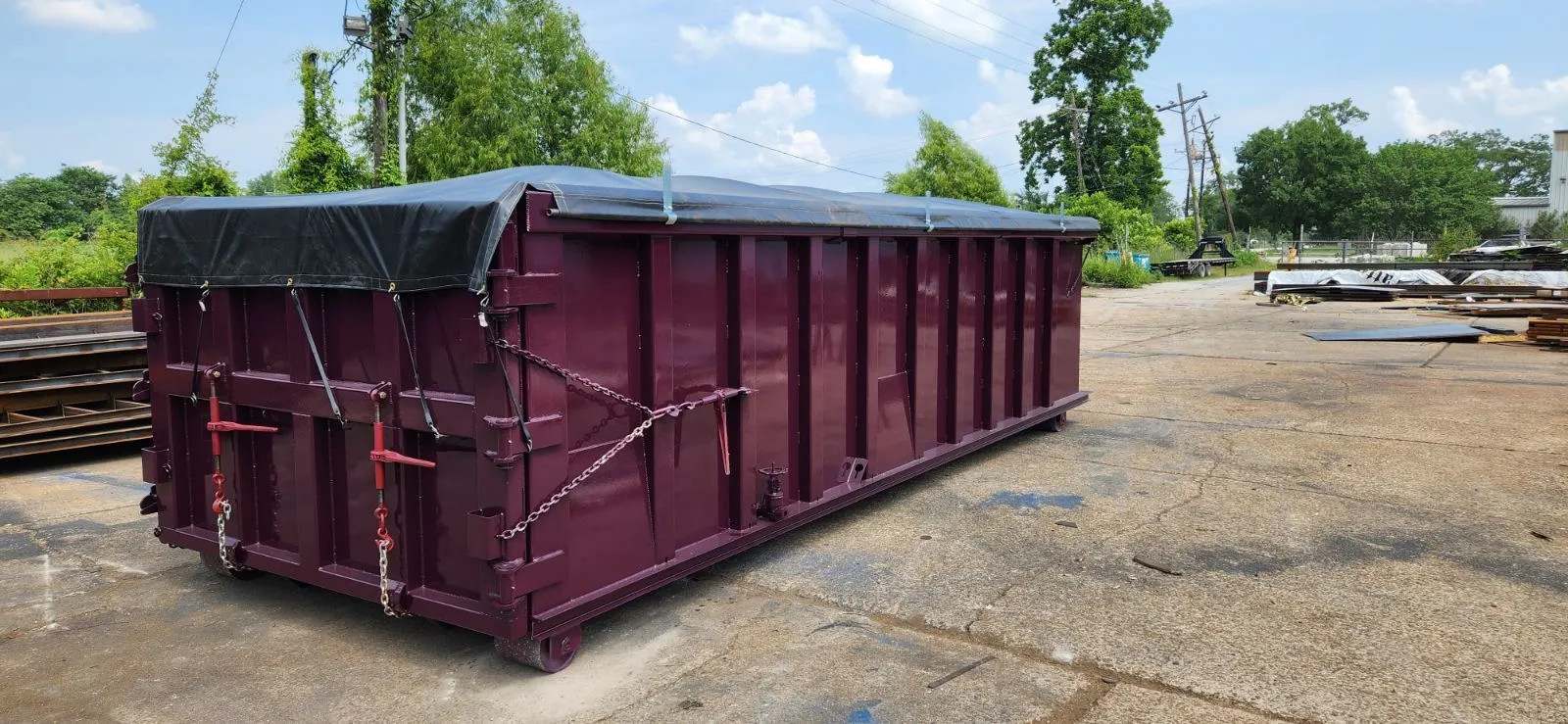
- Standard roll-off containers: Almost universally have a rear bottom drain hole as standard
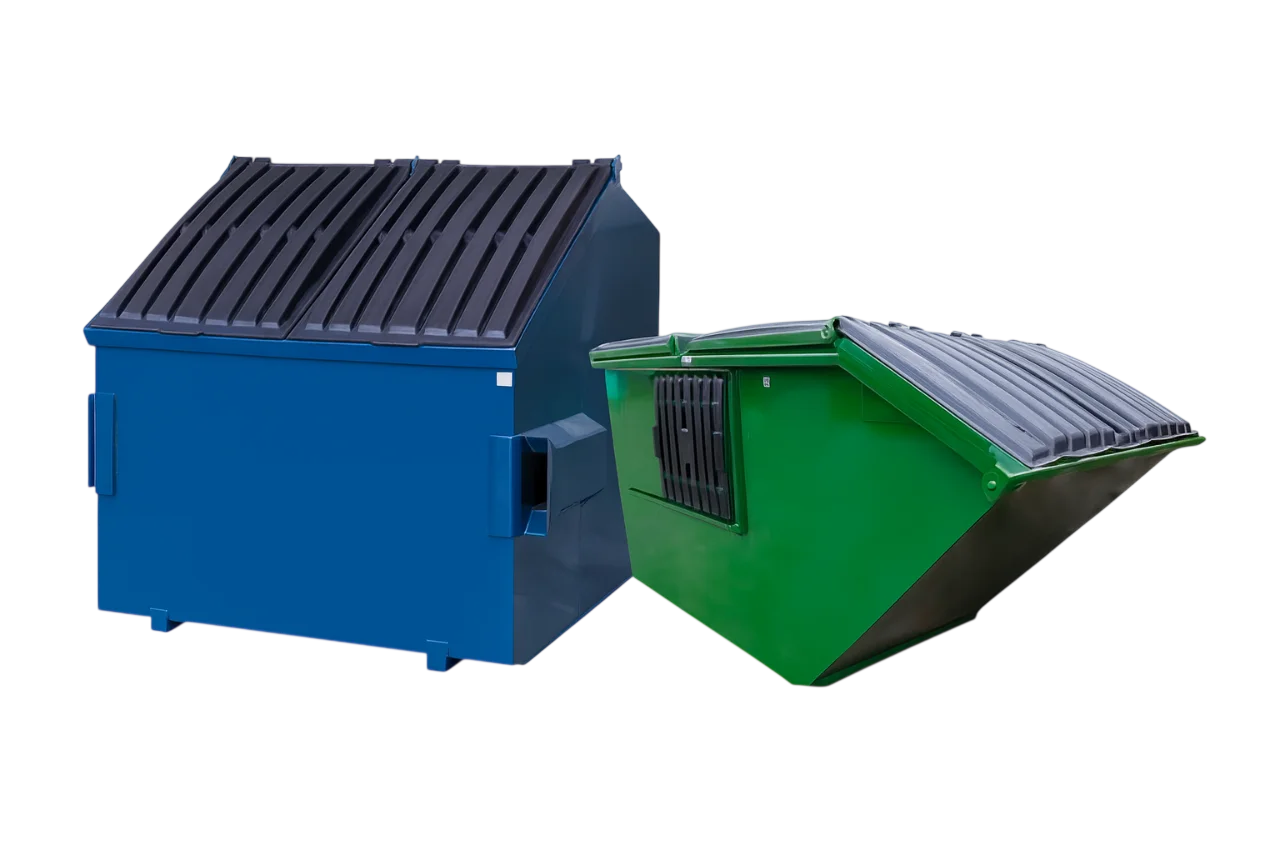
- Front-load commercial dumpsters: Typically have drain holes, usually at the rear or lowest corner of the body
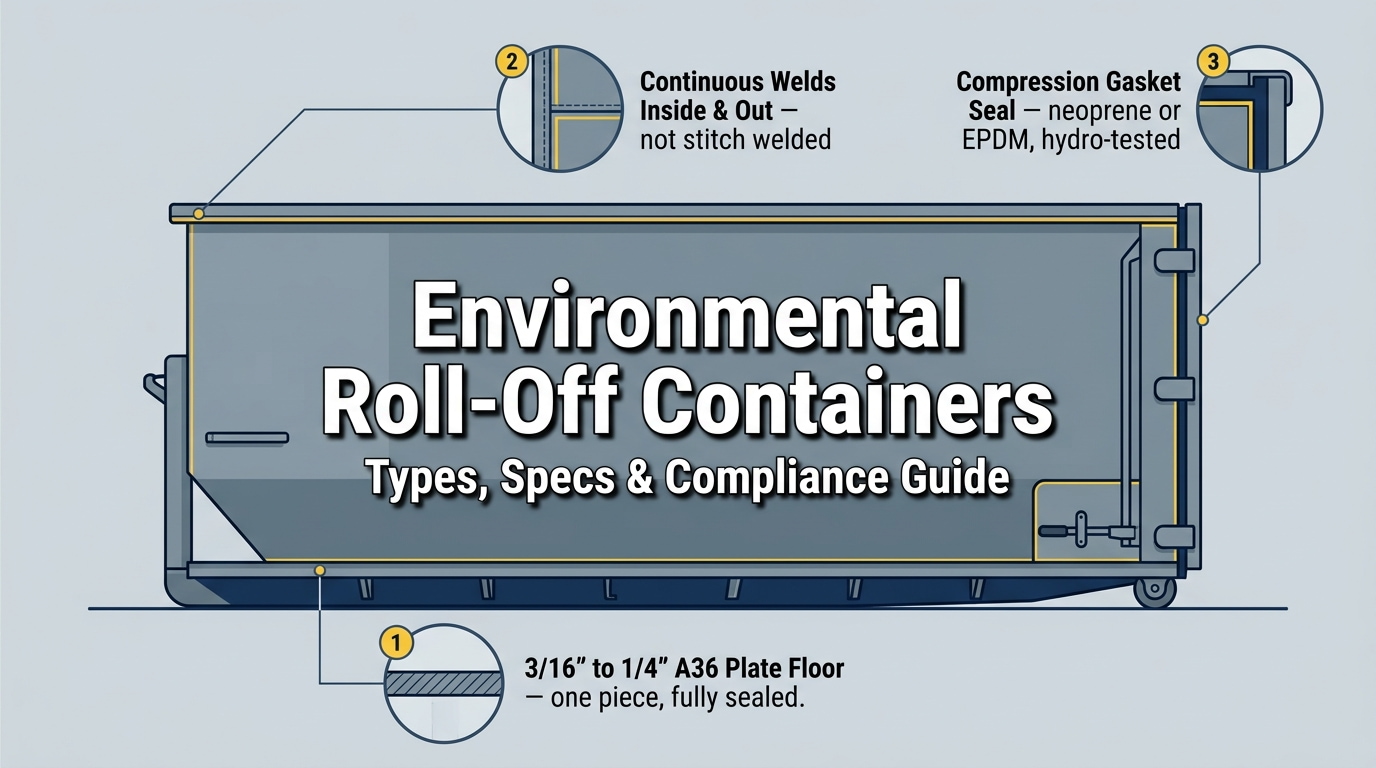
- Environmental or specialty containers: Some containers designed for hazardous or regulated waste are intentionally built without drain holes and are fully sealed to prevent any liquid from escaping
- Newer or custom containers: Design specifications vary by manufacturer — some operators request sealed containers for specific applications where drainage would be a compliance problem regardless
The intended use of the container drives the design. A container destined for a demolition site collecting dry debris has very different drainage needs than one stationed outside a restaurant. As a manufacturer, we design containers to match the operational reality of what they’ll actually hold.
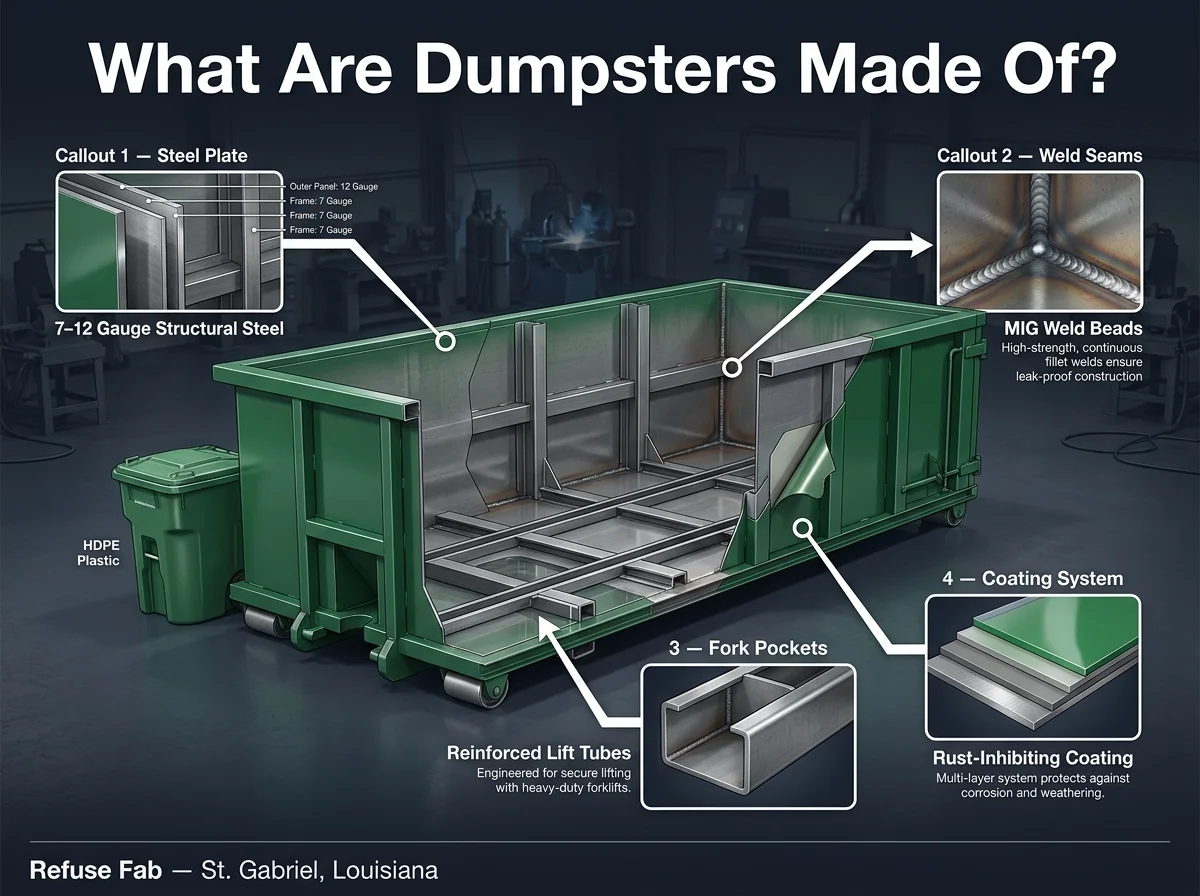
Need Containers Built Right from the Start? Refuse Fab manufactures custom roll-off containers in St. Gabriel, Louisiana built to your specs, with quality drain components, and ready for the demands of your operation.
Frequently Asked Questions
What should I do if a rented dumpster has a missing drain plug?
Contact the rental company immediately and request a replacement plug or a container swap. Don’t wait on this, if the container is positioned where it could drain onto pavement that leads to a storm drain, you could face liability for any stormwater contamination even as the renter. Document the condition with photos when you notice it.
Can I plug a dumpster drain hole myself?
Temporarily, yes but use the correct plug type for your container. Drain plugs are typically threaded and specific to the container’s drain port size. An improper plug that doesn’t seat correctly creates a false sense of security while still leaking. If you manage a fleet of containers, keeping spare drain plugs in your standard parts inventory is good practice.
Does a dumpster drain hole affect where I can place the container?
It should. Positioning a container over a storm drain grate, near a waterway, or on a slope where liquid would run toward a drain is a compliance risk if the drain plug is open or missing. On construction sites and commercial properties, check local stormwater permits — many explicitly require containers to be positioned away from drains and equipped with functioning plugs.