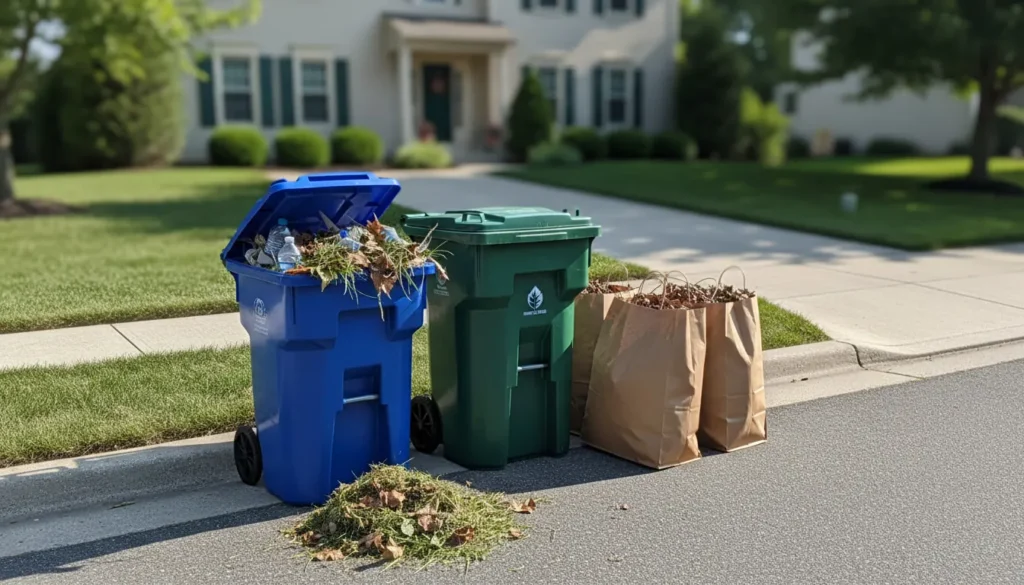
No, you should not toss yard waste (grass clippings, leaves, tree limbs, etc.) into your regular recycling bin. Recycling facilities are set up to handle clean plastics, paper, glass and metal – not organic yard debris. Putting clippings or branches in the recycling can actually ruin the recycling process, contaminate loads, and even break the machinery.
Why Yard Waste Doesn’t Belong in Recycling
Recycling systems expect items like clean bottles, cans and paper. Yard waste is organic and behaves very differently. Mixing it into the recycling bin causes big problems:
- Contamination: Wet grass, leaves or soil can get stuck on paper and plastic. This makes those materials dirty and often unrecyclable. Even a few handfuls of grass clippings can soak cardboard or tangle in plastic bottles, spoiling an otherwise good batch of recyclables.
- Machinery jams: Twigs, small branches and clumps of leaves can jam up or damage sorting machines. Recycling facilities have belts, grinders and magnets tuned for cans and bottles. A stray branch can jam gears or tear equipment, causing delays and extra repair costs.
- Local rules and bans: Many cities and states ban yard waste from trash and recycling because it has to be managed separately. Organic waste rots and produces methane – a potent greenhouse gas in landfills. In practice, this means throwing leaves and grass into the recycling bin may even violate your local laws or waste collection rules.
- Lost composting opportunity: Perhaps most importantly, yard waste is a valuable resource for gardens, not something to throw away. When you dump clippings into recycling, you miss the chance to turn them into rich compost or mulch for your lawn.
In short: tossing yard waste into the blue bin only causes contamination and waste. Instead, treat grass, leaves and branches as organic waste, not recyclables. That way you help the planet by keeping the recycling stream clean and by reusing yard waste in useful ways.
How to Dispose of Yard Waste Properly
Instead of recycling, use one of these better options for yard debris:
- Compost it: Start a backyard compost pile or bin. You can add grass clippings, leaves, spent flowers and small twigs to make nutrient-rich compost for your garden. Composting is easy and eco-friendly – microorganisms will break down the yard waste into rich soil. If you have no compost bin, consider burying a thin layer of grass under existing soil or tossing leaves into a compost-friendly spot even that helps recycle nutrients.
- Grasscycle or mulch: When mowing, don’t bag up short clippings. Leave them on the lawn as a natural mulch. If you cut your grass regularly (no more than 1 inch of blade at a time), the tiny clippings will decompose quickly and actually feed the grass. You can also rake up leaves and shredded prunings and spread them around garden beds as mulch. According to the National Wildlife Federation (via Republic Services), leaves are great natural fertilizer – they “support local ecosystems and can also be used as a natural mulch and fertilizer”. In other words, leaving or using yard debris on your property can make your garden healthier without extra cost.
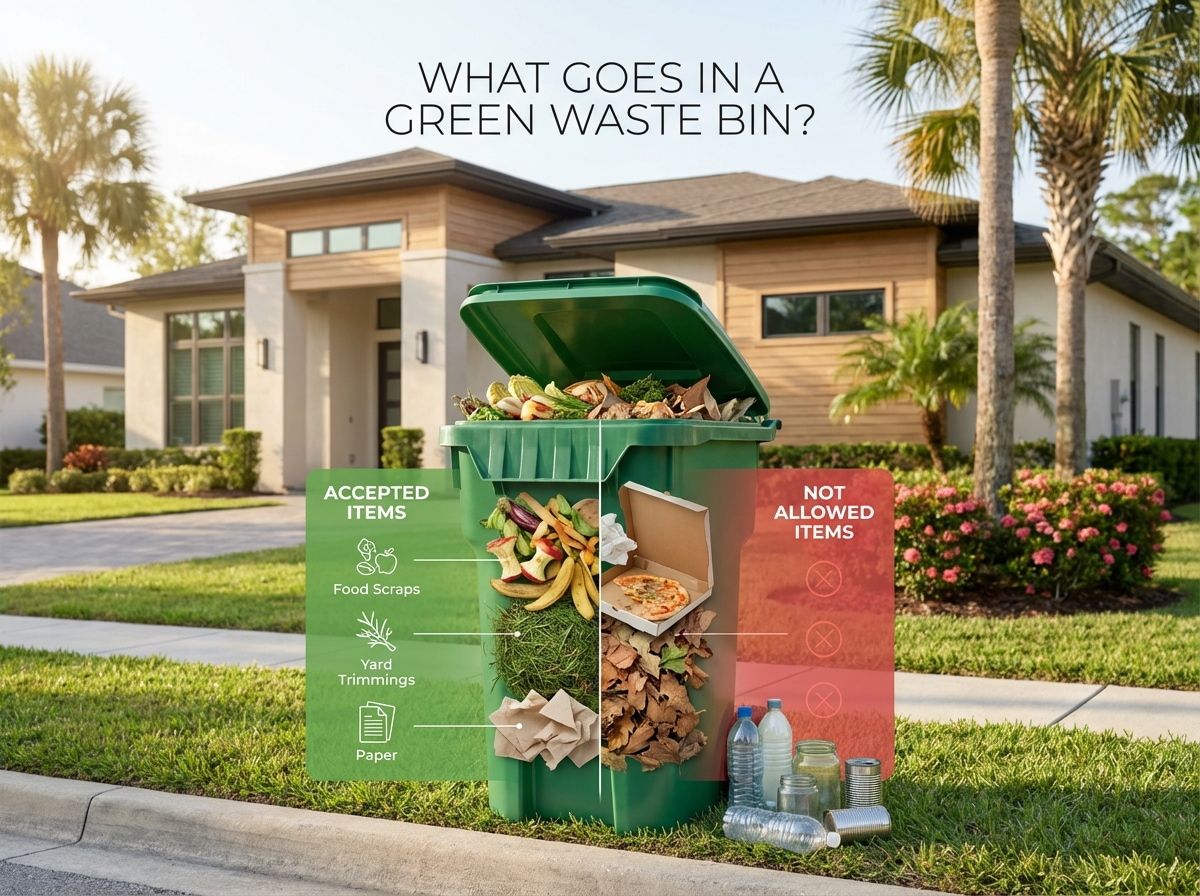
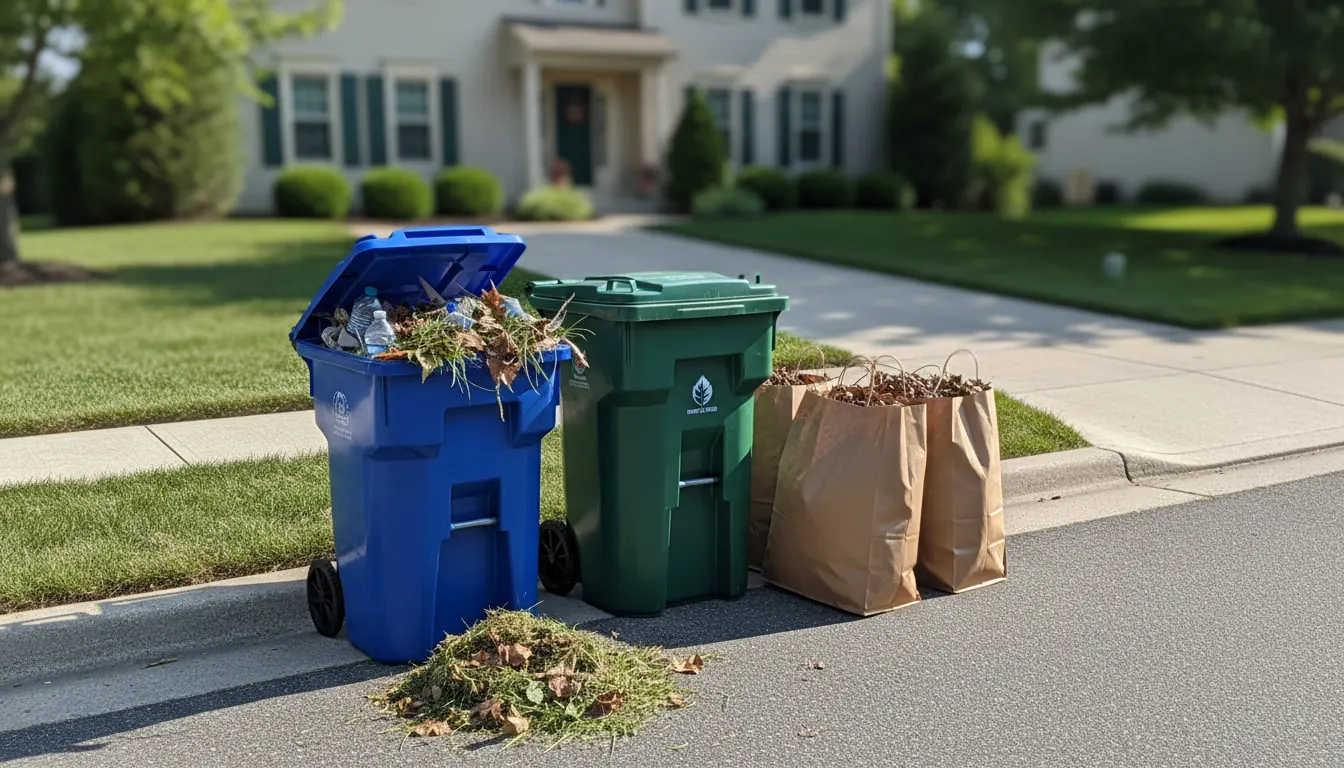
- Curbside yard waste collection: Most municipalities offer a separate yard-waste pickup. Check your city’s rules. For example, in Baton Rouge (LA) residents are told to bag leaves and grass clippings and put brush and branches in bundles. Similarly, New Orleans requires yard waste like leaves and grass to be bagged and tree limbs bundled (up to 4 feet long) for pickup. If your city uses a “green bin” or special yard-waste can, use that instead of the blue recycling bin. The key is: bag it or bundle it on the curb, not in your recycling. These separate collection programs then take the yard waste to a composting or mulching facility, rather than the materials recovery facility.
- Drop-off sites or services: If curbside pickup isn’t available, look for local drop-off centers or private services. Many waste haulers and recycling centers have yard waste drop-off sites where you can dump leaves and branches. Some areas even rent wood-chippers or offer bulk yard-debris collection days. You can also hire lawn or tree services that will haul away debris. The important part is to keep yard waste out of your household recycling stream.
By using these alternatives, you keep recyclables clean and make good use of your yard debris. For example, composting or mulching yard waste reduces landfill methane and enriches your soil. It also follows local waste rules – most cities would rather collect yard trimmings separately than have them contaminate recycling or landfill trash.
Final Tips
To sum up: Don’t put grass, leaves, or branches in your blue recycling bin. Instead, remember:
- Yard waste belongs in compost bins, green/yard-waste bins, or curbside yard-debris collections – not mixed with paper and plastic.
- Check your local guidelines. In Louisiana cities (for example), residents place bagged leaves/grass and bundled limbs at the curb on yard-waste day.
- Composting or mulching yard waste at home is free and beneficial for gardens.
Following these steps ensures your recycling stream stays clean and your yard waste gets turned into something useful, a win-win for you and the environment!